Table Tennis Table Dimensions in Feet: The Complete Guide to Choosing the Right Size
Choosing the right ping pong table sounds simple until you start comparing measurements, room sizes, and different table types online. Some tables are designed for professional-level matches, while others are built mainly for casual family fun. That’s why understanding table tennis table dimensions in feet is so important before making a purchase.
Many beginners buy a table based only on price or appearance and later realize it doesn’t fit their room properly or feels uncomfortable during gameplay. A table that’s too small can make rallies feel cramped, while one that barely fits your space quickly becomes frustrating. The right dimensions improve movement, ball bounce, comfort, and overall playing experience.
In this guide, you’ll learn the official table tennis table standard size, measurements in inches, centimeters, meters, and millimeters, plus the differences between full-size, mid-size, and mini tables. We’ll also cover room space recommendations, buying tips, and answers to the most common questions people ask before choosing a ping pong table. Whether you’re setting up a game room, garage, office, or basement, this guide will help you choose the right setup with confidence.
Why Table Dimensions Matter in Table Tennis
A table tennis table isn’t just a flat surface. Its dimensions directly affect how the game feels and how players move around the table.
Using the correct size helps with:
- Better footwork and positioning
- More realistic gameplay
- Consistent ball bounce
- Proper spin and shot angles
- Safer movement around the table
Smaller recreational tables may work for casual fun, but they change the pace and rhythm of the game. Full-size tables provide the most natural playing experience because they give enough room for rallies, defensive shots, and advanced movement.
Even casual players notice the difference once they switch to a properly sized setup.
Official Table Tennis Table Standard Size
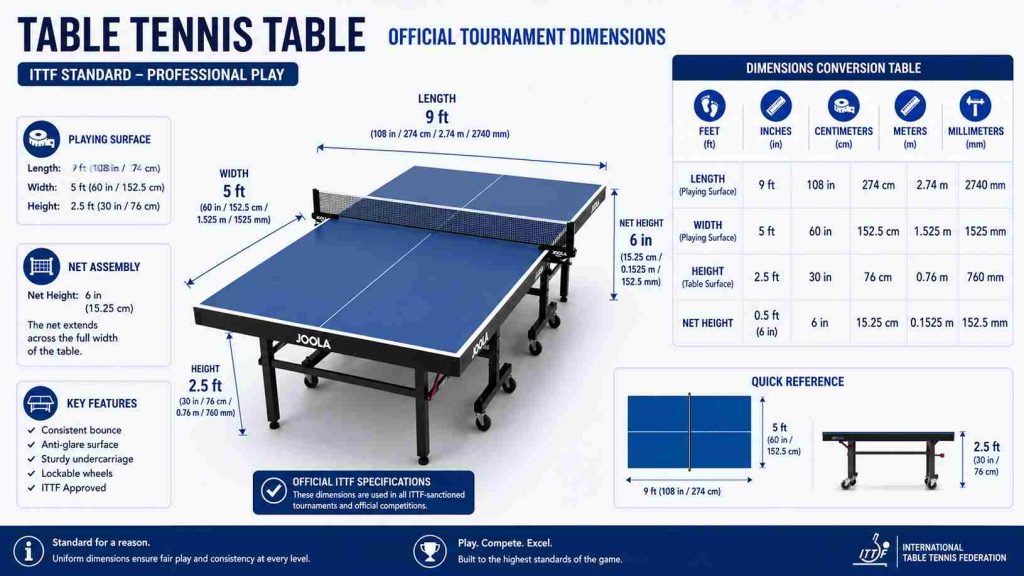
The International Table Tennis Federation (ITTF) sets the official dimensions used in professional competitions worldwide.
Table Tennis Table Dimensions in Feet, Standard Measurements
A regulation-size table measures:
- Length: 9 feet
- Width: 5 feet
- Height: 2.5 feet
The net sits in the center and measures:
- Net height: 6 inches
These measurements create a balanced playing surface for consistent gameplay and proper shot development.
Official Dimensions in Different Units
These official measurements stay consistent across tournaments, clubs, and high-quality home tables.
Table Tennis Table Size in Inches, CM, Meters, and MM
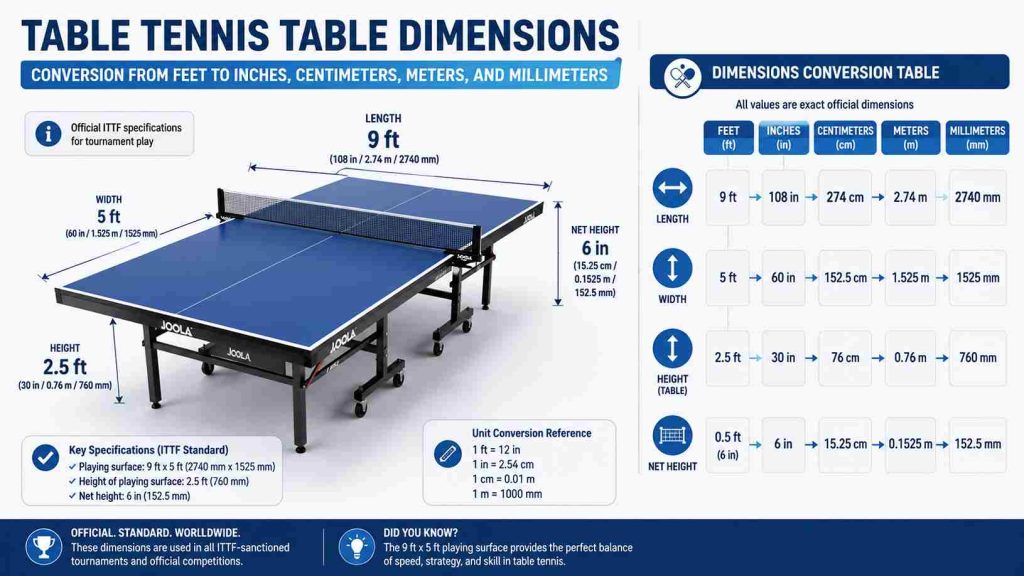
Different manufacturers use different measurement systems, especially when selling internationally. Understanding conversions makes shopping easier and prevents confusion.
Table Tennis Table Size in Inches
The official dimensions are:
- 108 inches long
- 60 inches wide
- 30 inches high
Table Tennis Table Size in CM
Standard size in centimeters:
- 274 cm x 152.5 cm x 76 cm
Table Tennis Table Size in Meters
Professional tables measure:
- 2.74 m x 1.525 m x 0.76 m
Table Tennis Table Size in MM
In millimeters:
- 2740 mm x 1525 mm x 760 mm
These measurements all represent the same regulation-size table.
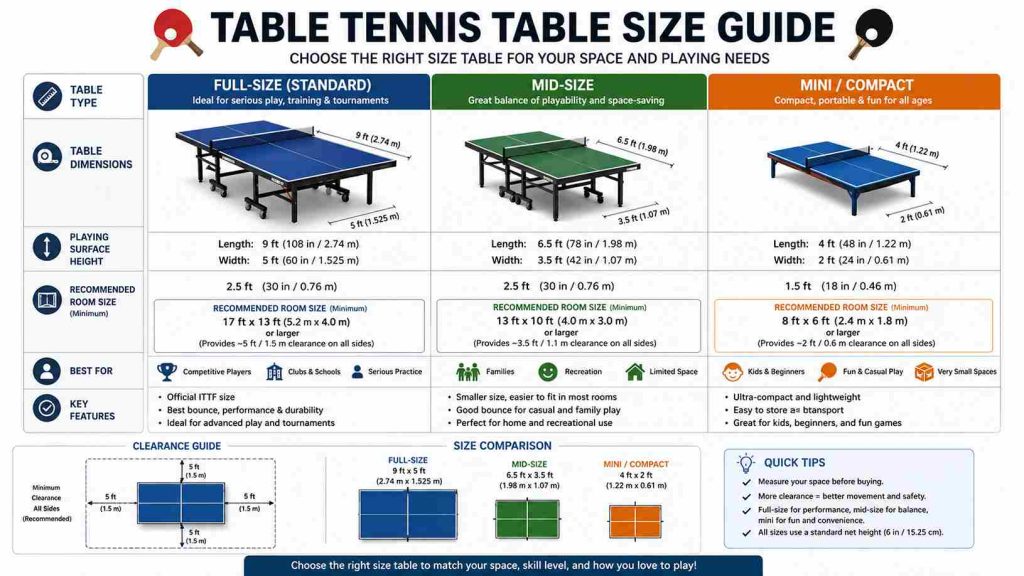
Full-Size vs Mid-Size vs Mini Ping Pong Tables
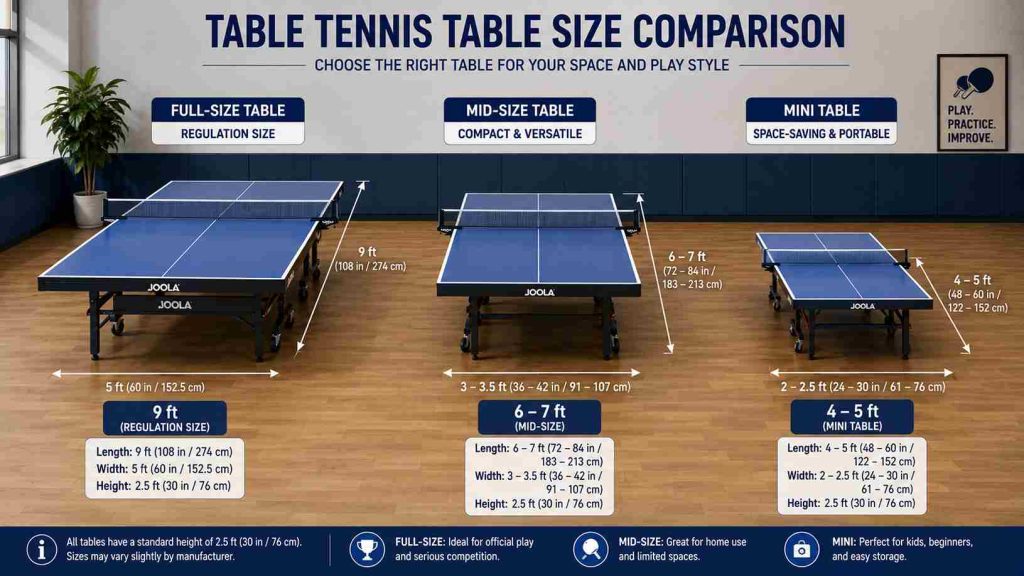
Not everyone has enough room for a tournament-size setup. Fortunately, there are smaller alternatives that still provide enjoyable gameplay.
Comparison of Different Table Sizes
Full-Size Ping Pong Table
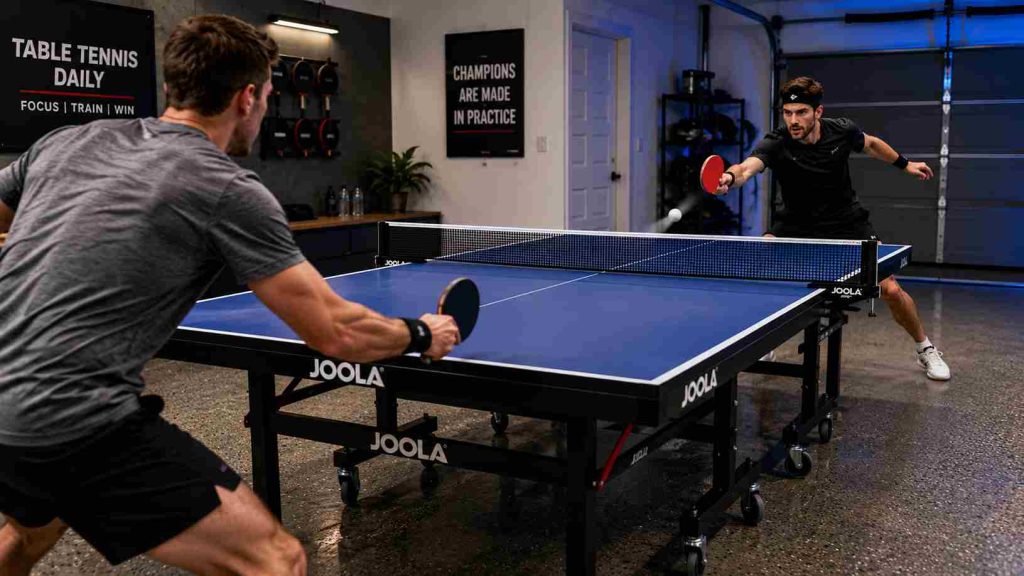
A full-size ping pong table delivers the closest experience to tournament play. It allows players to practice serves, spins, and footwork properly while developing realistic timing and movement.
This option works best for:
- Dedicated game rooms
- Garages with enough clearance
- Competitive players
- Long-term skill development
Mid Size Ping Pong Table Dimensions
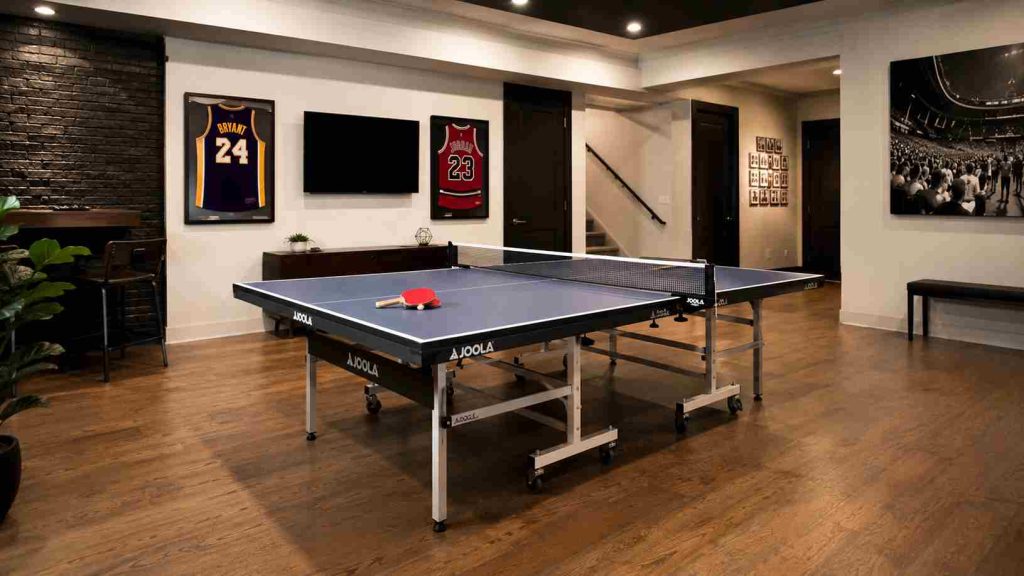
Mid-size tables are popular because they save space while still feeling close to the real game.
Common dimensions include:
- 7 ft x 4 ft
- 6 ft x 3 ft
These tables are ideal for:
- Apartments
- Offices
- Smaller basements
- Family recreation rooms
A good mid-size table often provides a better experience than a low-quality full-size model.
Mini Table Tennis Table Size in Feet
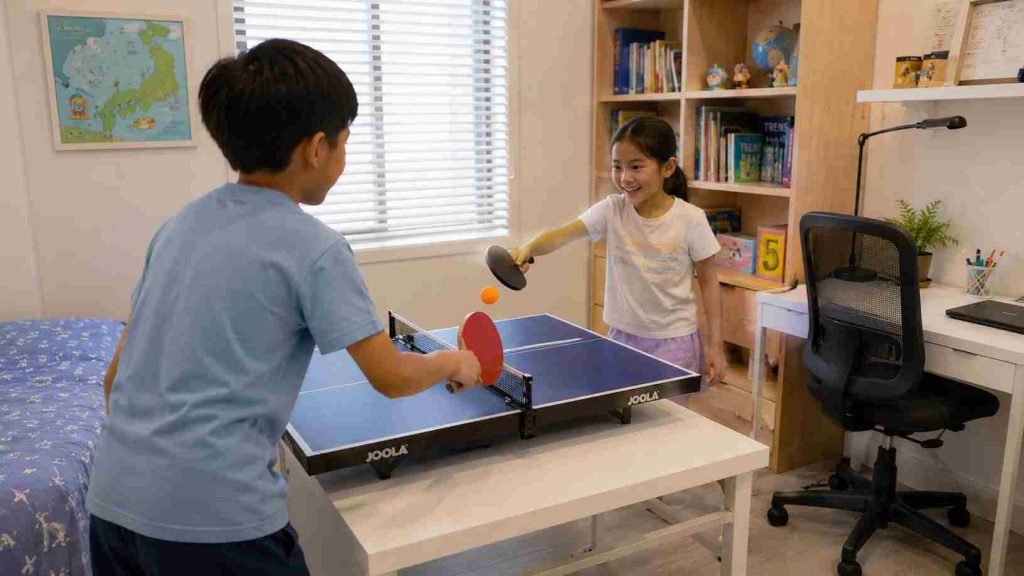
Mini tables are built mainly for casual entertainment and compact areas.
Most measure:
- 4–6 feet long
- 2–3 feet wide
They work well for:
- Children
- Small apartments
- Temporary setups
- Travel or portable gaming
Gameplay feels faster and less realistic, but mini tables are still excellent for reaction training and casual fun.
How Much Room Do You Need Around the Table?
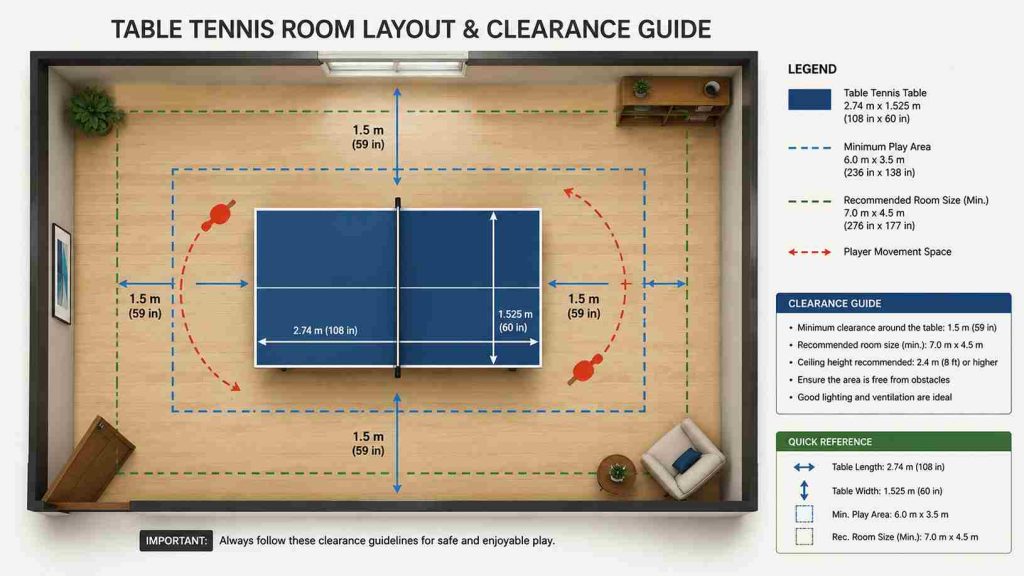
One of the biggest mistakes buyers make is measuring only the table itself. You also need enough surrounding space to move comfortably during rallies.
Recommended Room Sizes
For comfortable gameplay:
- Leave at least 4–6 feet on the sides
- Keep 8–10 feet behind each end
Low ceilings can also affect gameplay, especially if players use high lobs or defensive shots. Proper lighting is equally important because glare and shadows make tracking the ball difficult.
Recreational vs Tournament Tables
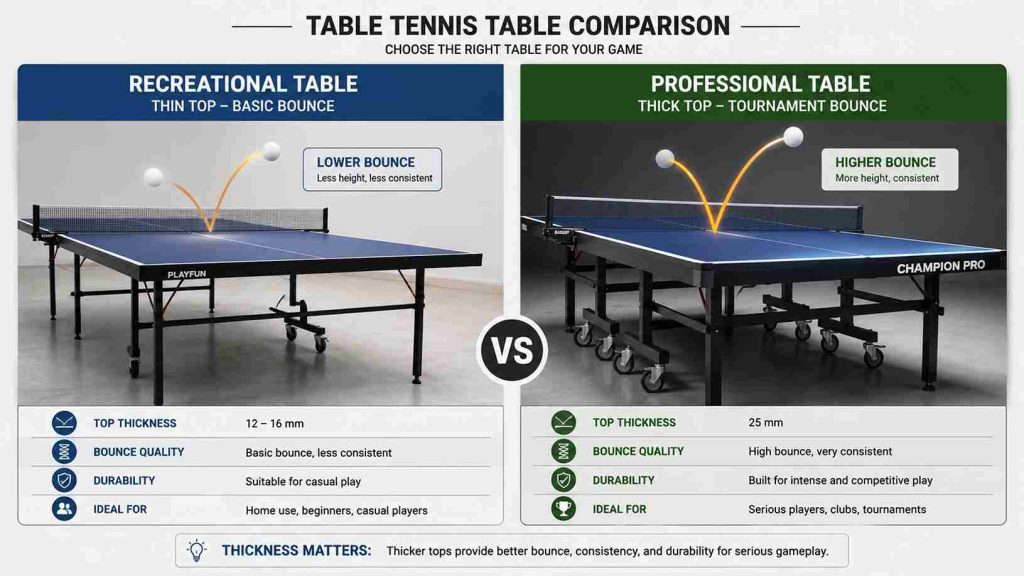
Not all tables perform the same, even if they share identical dimensions.
Thickness of the Playing Surface
Table thickness greatly affects bounce consistency.
Thicker surfaces usually provide:
- More consistent bounce
- Better spin response
- Improved durability
Indoor vs Outdoor Tables
Indoor tables usually offer the best gameplay quality because their surfaces are smoother and more responsive.
Outdoor tables use weather-resistant materials that handle moisture and sunlight better but sometimes feel slightly slower during play.
Foldability and Storage
Many modern tables fold vertically for easier storage. Some even allow solo practice by folding up one side.
If space is limited, wheels and folding features can make a huge difference in day-to-day convenience.
Tips for Choosing the Right Ping Pong Table
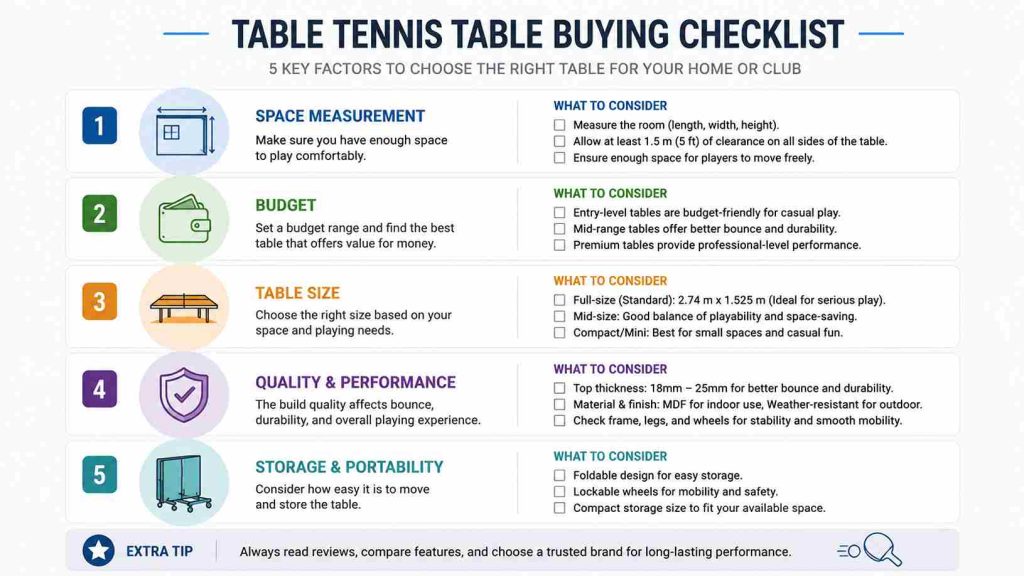
Measure Your Space Carefully
Always include:
- Walking space
- Furniture clearance
- Swing room
- Storage area
Many buyers underestimate how much movement space they actually need.
Match the Table to Your Goals
Choose a full-size table if:
- You want realistic practice
- You plan to improve seriously
- You have enough room
Choose mid-size or mini options if:
- Space is limited
- You mainly play casually
- Portability matters more
Focus on Quality, Not Just Size
A sturdy mid-size table with good bounce usually feels better than a cheap oversized table with poor construction.
Consider Storage and Portability
Foldable tables are ideal for:
- Shared spaces
- Garages
- Offices
- Apartments
Portable designs also make cleaning and rearranging easier.
Frequently Asked Questions
Final Thoughts
Choosing the right ping pong table becomes much easier once you understand the different sizes and how they affect gameplay. A full-size table offers the most realistic experience and is perfect for serious practice, while mid-size and mini tables provide practical solutions for smaller homes and casual players.
Before buying, take time to measure your available space carefully. Many people focus only on the table dimensions and forget about movement room, storage, and overall comfort. Even the best table can feel frustrating if your playing area is too cramped.
It’s also important to think about your long-term goals. If you simply want occasional family fun, a compact or mid-size setup may be more than enough. If you plan to improve your skills, investing in a quality full-size table with a thicker playing surface will usually provide a much better experience over time.
Most importantly, choose a table you’ll actually enjoy using regularly. Whether it’s a small setup in the basement or a tournament-style table in the garage, the real fun comes from playing, improving, and sharing great matches with friends and family.

Lin Xiaoyu
Lin Xiaoyu is a table tennis author with a strong understanding of competitive gameplay, match tactics, and player development. Through years of game analysis, technical study, and close observation of the sport, Lin brings practical insight and clear, reader-friendly explanations to every article.
She specializes in covering table tennis techniques, playing styles, equipment knowledge, footwork, spin control, and match strategy in a way that helps players, coaches, and fans better understand the speed, precision, and tactical depth of modern table tennis.