Olympic Table Tennis Table Dimensions: Official ITTF Standards, Measurements, and Setup Guide
Table tennis is one of the fastest and most technically demanding sports in the world, and the Olympic version of the game follows extremely precise standards. From the exact table length to the net height and surrounding play area, every measurement affects gameplay, player movement, ball bounce, and overall match quality. Whether you are setting up a home game room, designing a school sports facility, practicing competitively, or simply researching the official Olympic table tennis table dimensions, understanding the correct specifications is essential.
Many people search for terms like Olympic size table tennis dimensions, table tennis table size in feet, or table tennis table standard size because they want accurate measurements before buying a table or planning a playing area. However, many online guides provide incomplete information, confusing conversions, or fail to explain the difference between professional and recreational setups.
This guide simplifies everything in one place. You’ll learn the official ITTF-approved dimensions in feet, inches, centimeters, and meters, understand Olympic court and clearance requirements, compare mini and mid-size tables, and discover practical setup tips for both beginners and serious players. By the end, you’ll have a complete understanding of how Olympic-level table tennis tables are measured and why those standards matter.
Official Olympic and ITTF Table Standards
The International Table Tennis Federation (ITTF) establishes the official standards used in Olympic competition and professional tournaments worldwide. These rules ensure fairness, consistent bounce, and equal playing conditions regardless of where matches are played.
Official Measurements Olympic Table Tennis Table Dimensions
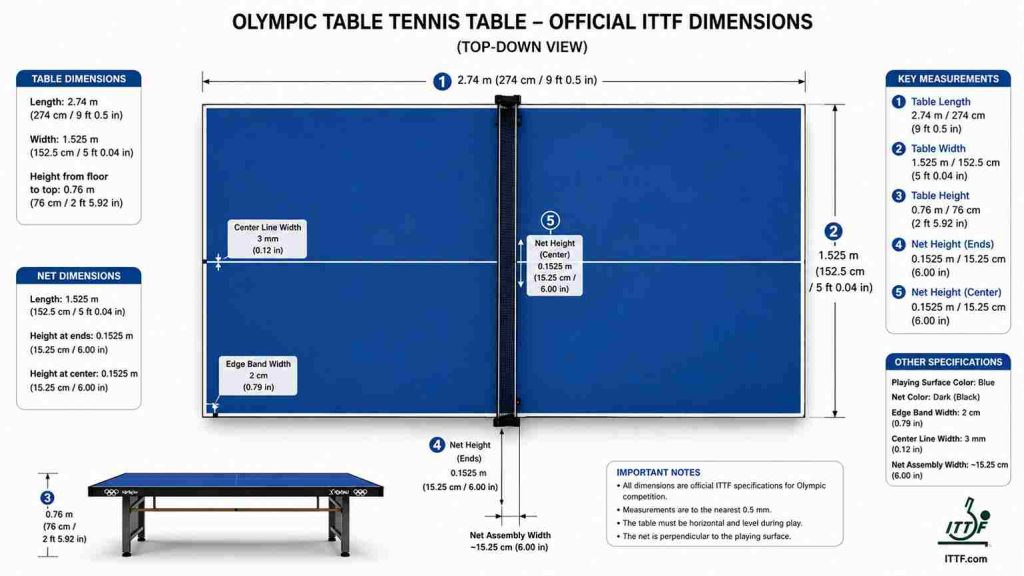
The official competition table includes the following specifications:
- Length: 2.74 meters
- Width: 1.525 meters
- Height from floor to playing surface: 76 centimeters
- Net height: 15.25 centimeters
- Boundary line thickness: 2 centimeters
- Center line for doubles: 3 millimeters
The table is divided into two equal halves by the net. Only the top surface is considered playable during official matches.
Professional tournament tables usually feature dark matte blue or green finishes to improve visibility and reduce glare under bright lighting.
Why Standard Measurements Matter
Official sizing creates balanced gameplay and consistent ball response. Players train for years using identical measurements so they can adapt quickly during professional competition.
Accurate sizing also helps:
- Improve shot timing
- Maintain realistic practice conditions
- Support proper movement patterns
- Create fair competitive play
- Deliver consistent bounce quality
For beginners and home users, learning official standards makes it easier to choose the right table and setup.
Table Tennis Table Size in Feet, Inches, CM, and Meters
Many buyers compare measurements using different unit systems. The dimensions remain identical worldwide regardless of whether you measure in feet, inches, centimeters, or meters.
Standard Measurement Conversion Table
Each half of the table measures approximately 1.37 meters from the net to the end line.
Understanding the Measurements
The standard dimensions are carefully designed to balance speed, spin, and player movement. A slightly larger or smaller surface would significantly change the game.
Players searching for:
- table tennis table size in feet
- table tennis table size in inches
- table tennis table size in cm
- table tennis table size in meters
are all referring to the same official ITTF-approved dimensions.
Table Height, Net Height, and Surface Details
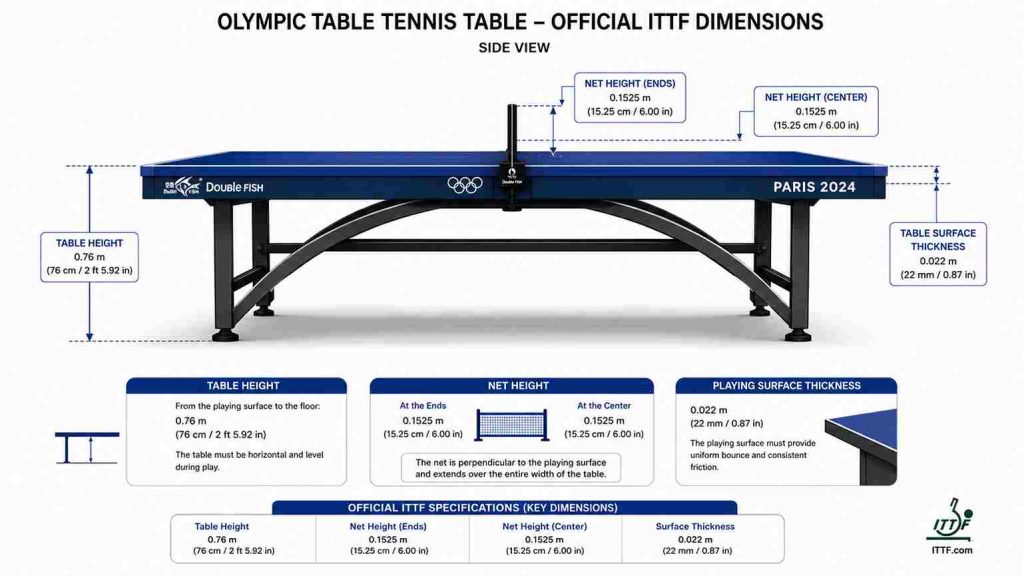
The table height and surface quality play a major role in gameplay consistency.
Official Table Height
The playing surface must stand exactly 76 centimeters above the floor. This height allows players to maintain natural posture and movement during rallies.
Changing the height even slightly can affect:
- Ball trajectory
- Stroke timing
- Footwork mechanics
- Player comfort
Net Specifications
The net assembly must:
- Stand 15.25 cm high
- Stretch across the entire width
- Extend 15.25 cm beyond each side
- Remain evenly tensioned
A loose or uneven net can dramatically change gameplay.
Surface Thickness and Bounce
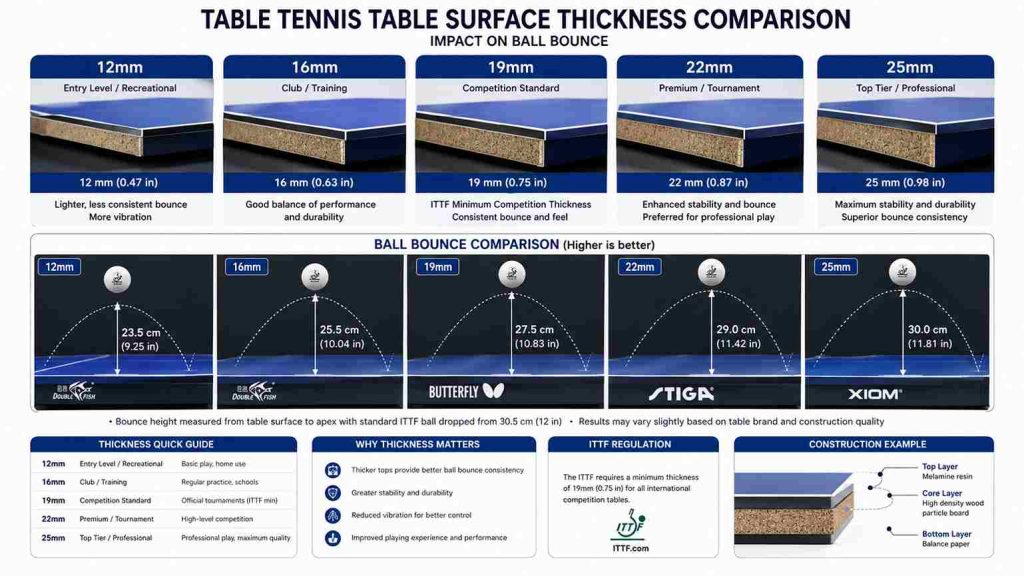
Higher-quality tables generally provide better bounce consistency.
Olympic-level tables commonly use 22–25 mm playing surfaces for superior ball response.
Matte vs Glossy Surfaces
Professional tables use matte finishes because glossy surfaces reflect overhead lighting and make the ball harder to track.
Olympic Table Tennis Court and Play Area Dimensions
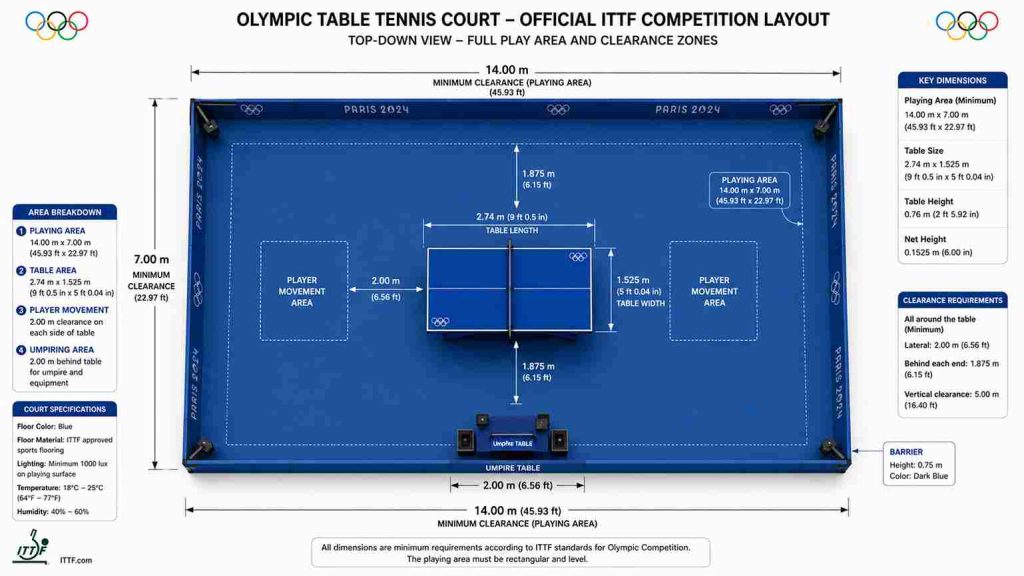
The table itself only represents part of the total playing requirement. Competitive matches need significant surrounding space for movement, safety, and comfort.
Recommended Playing Area Sizes
Space Planning for Home Use
For comfortable recreational play, leave:
- At least 3–5 feet behind each end
- Around 3 feet on both sides
- Additional space for doubles matches
Limited movement space reduces gameplay quality and can increase the risk of collisions.
Ceiling Height Considerations
Low ceilings can interfere with lobs and defensive shots. Taller ceilings improve the playing experience, especially for advanced players.
Mini and Mid-Size Ping Pong Table Comparison
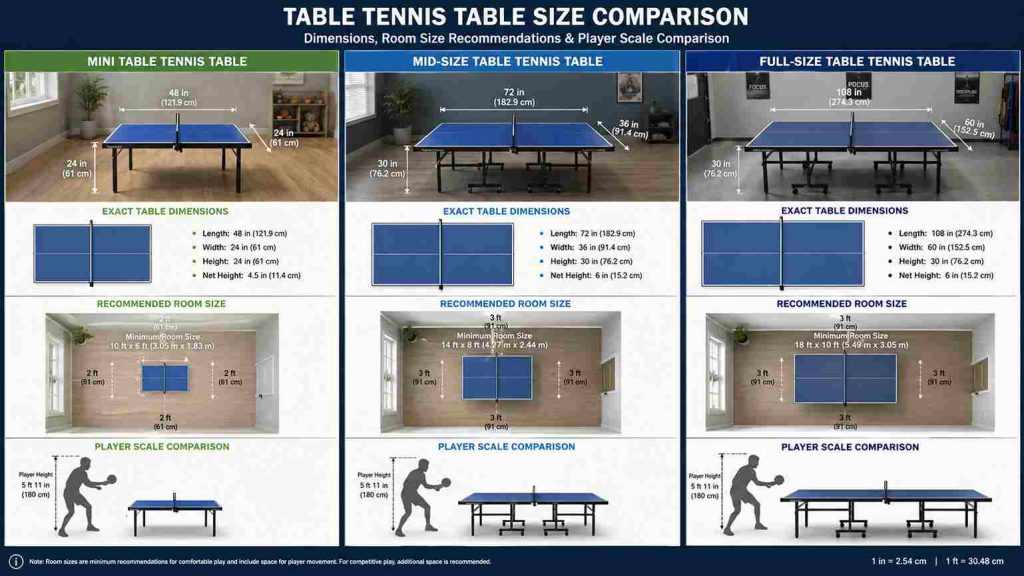
Not every home or school has enough space for a full-size table. Smaller alternatives can still provide enjoyable gameplay.
Comparison Table
Which Size Is Best?
Full-Size Tables
Best for:
- Serious practice
- Competitive training
- Clubs and schools
- Skill development
Mid-Size Tables
Ideal for:
- Apartments
- Family game rooms
- Casual practice
- Flexible storage
Mini Tables
Suitable for:
- Young children
- Travel use
- Very small rooms
- Recreational fun
Smaller tables help beginners learn basic skills before transitioning to regulation size.
Table Tennis Court Diagram with Measurements
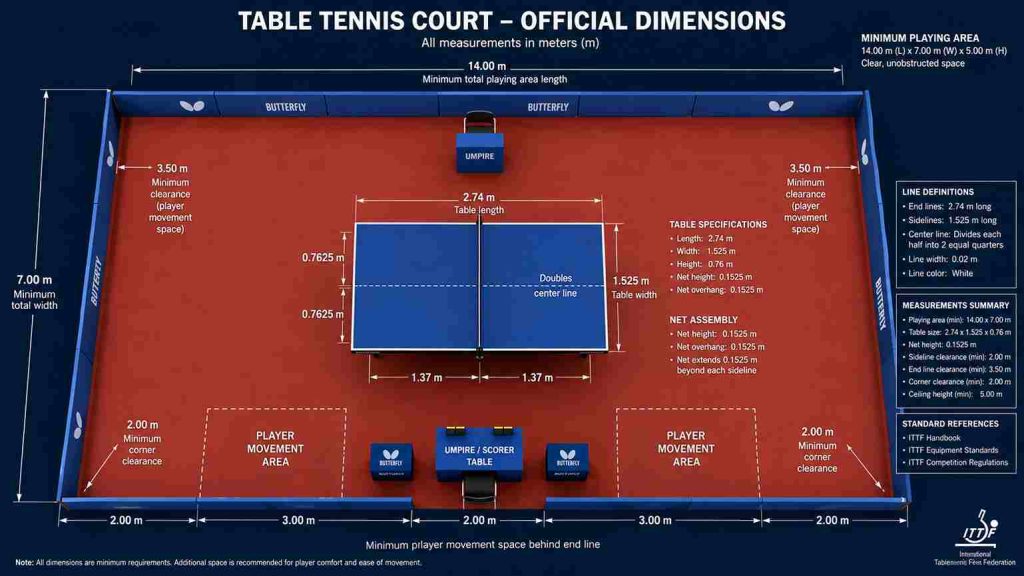
A proper table tennis court diagram with measurements should clearly display:
- Table length and width
- Net placement
- Boundary lines
- Doubles center line
- Clearance zones
- Player movement areas
Diagram Layout Description
The layout typically includes:
- Table dimensions: 274 cm × 152.5 cm
- Net height: 15.25 cm
- White side and end lines: 2 cm
- Center doubles line: 3 mm
- Rear movement space
- Side clearance zones
Recommended Diagram Placement
Insert a top-down labeled diagram after this section showing:
- Exact table measurements
- Net position
- Playing area dimensions
- Suggested clearance zones
- Singles and doubles layout
Visual diagrams improve understanding significantly for beginners and buyers planning room layouts.
Common Mistakes and Myths
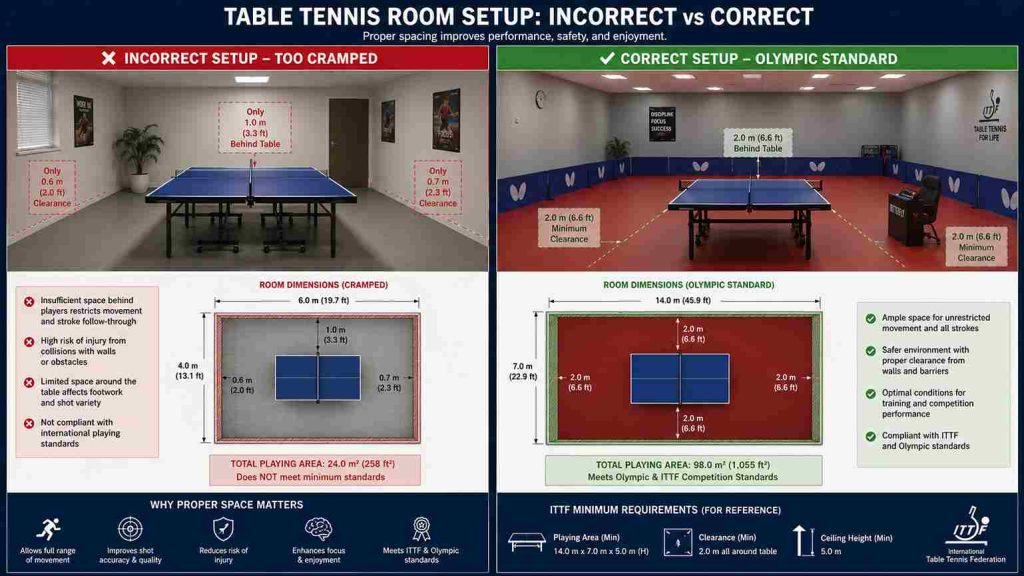
Many people misunderstand official table requirements or choose unsuitable setups.
Buying Without Measuring the Room
One of the most common mistakes is purchasing a full-size table before checking available movement space.
Assuming Any Table Works for Serious Practice
Budget recreational tables may:
- Provide inconsistent bounce
- Feel unstable
- Warp over time
- Reduce training quality
Ignoring Floor Conditions
Uneven or slippery flooring affects movement and can increase injury risk.
Choosing Glossy Surfaces
Glossy finishes create glare and reduce visibility during fast rallies.
Believing Taller Tables Benefit Taller Players
Official height remains fixed regardless of player height.
Practical Buying and Setup Tips
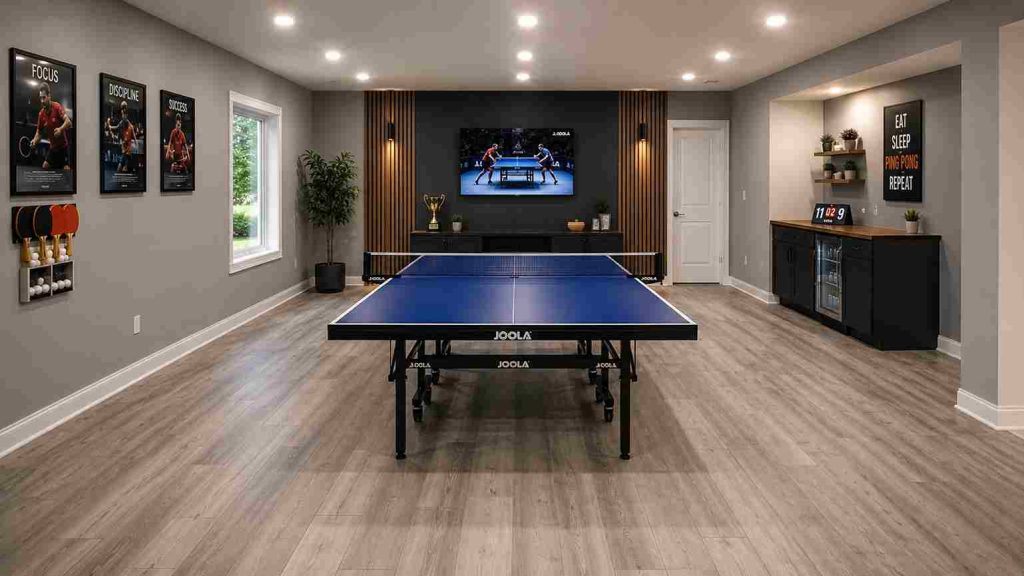
Selecting the right table depends on your budget, available space, and playing goals.
Tips for Beginners
If you are starting out:
- Consider a mid-size model for smaller rooms
- Choose foldable designs for easy storage
- Look for locking wheels
- Prioritize stable construction
- Check bounce consistency before purchase
Space Planning Tips
Before buying a table:
- Measure the room carefully
- Include movement space around the table
- Check ceiling height
- Consider lighting placement
- Plan for doubles play if needed
Choosing the Right Surface Thickness
Thicker surfaces generally provide:
- Better bounce consistency
- Longer durability
- Improved spin response
- More realistic gameplay
Lighting Recommendations
Good lighting should:
- Cover the entire playing area
- Avoid glare
- Reduce shadows
- Maintain clear ball visibility
Indoor vs Outdoor Considerations
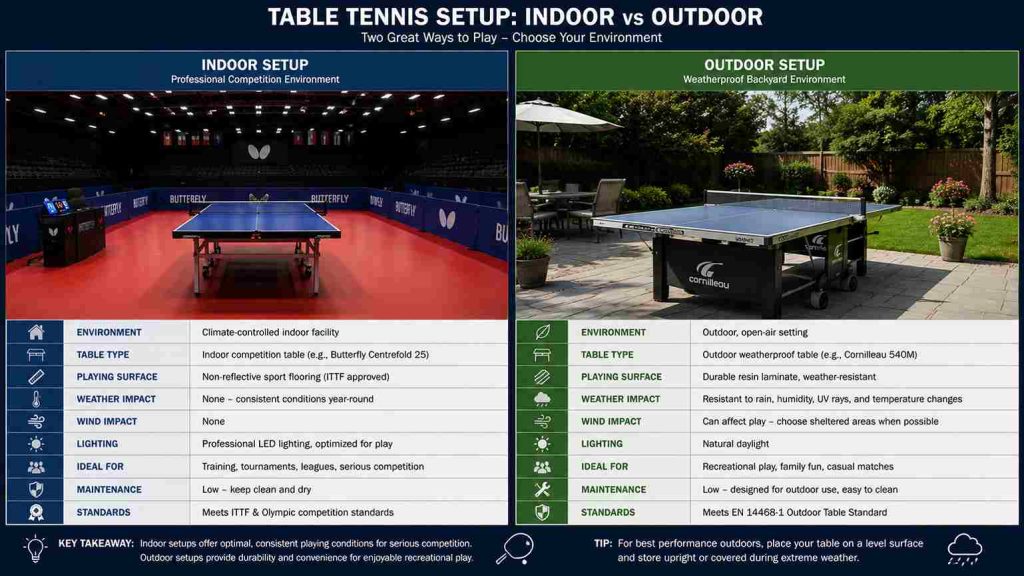
Both indoor and outdoor tables follow similar core measurements, but their materials differ significantly.
Indoor Tables
Indoor tables usually provide:
- Better bounce quality
- Smoother surfaces
- Professional-level performance
- Longer-lasting consistency indoors
However, they should be protected from moisture and humidity.
Outdoor Tables
Outdoor models use weather-resistant materials designed to withstand:
- Sunlight
- Rain
- Humidity
- Temperature changes
Although durable, outdoor conditions such as wind can still affect gameplay.
Flooring and Stability
For the best experience:
- Use level flooring
- Add non-slip mats if needed
- Keep the table stable during rallies
- Avoid uneven outdoor surfaces
Small setup improvements can greatly improve comfort and gameplay quality.
Frequently Asked Questions
Conclusion
Understanding the official Olympic table tennis table dimensions is important for anyone interested in playing, training, coaching, or buying the right setup for home or competitive use. The standard competition table measures 2.74 meters long, 1.525 meters wide, and 76 centimeters high, with a carefully regulated net height of 15.25 centimeters. These measurements create balanced gameplay, reliable bounce, and fair conditions at every level of the sport.
Beyond the table itself, proper playing space, lighting, flooring, and surface quality also affect the overall experience. Many beginners focus only on the table dimensions while overlooking movement clearance and setup quality. A well-planned environment improves comfort, safety, and long-term skill development.
Whether you choose a professional full-size table, a practical mid-size model, or a compact mini table for smaller spaces, understanding official standards helps you make smarter decisions and avoid costly mistakes. Taking time to measure your available area, select the right surface thickness, and create a stable playing setup will lead to a more enjoyable and realistic experience.
Table tennis remains one of the most accessible and exciting sports for players of all ages. Starting with the correct setup provides a strong foundation for practice, improvement, and years of enjoyable gameplay.

Lin Xiaoyu
Lin Xiaoyu is a table tennis author with a strong understanding of competitive gameplay, match tactics, and player development. Through years of game analysis, technical study, and close observation of the sport, Lin brings practical insight and clear, reader-friendly explanations to every article.
She specializes in covering table tennis techniques, playing styles, equipment knowledge, footwork, spin control, and match strategy in a way that helps players, coaches, and fans better understand the speed, precision, and tactical depth of modern table tennis.