The World of Pickleball Games: A Comprehensive Guide 2026
Pickleball games have surged in popularity across the United States, transforming from a niche backyard pastime into a mainstream sport captivating millions. Combining elements of tennis, badminton, and table tennis, pickleball offers an accessible entry point for players of all ages and fitness levels. Its versatility makes it ideal for recreational enjoyment, social interaction, and competitive pursuits.
In recreational settings, pickleball games foster social bonds, as friends and families gather to engage in light-hearted matches emphasizing fun over rivalry. The low-impact nature allows participants to stay active without excessive strain, supporting cardiovascular health, balance, and coordination.
On the competitive side, pickleball games have evolved into organized tournaments and professional leagues, showcasing athletes pushing the boundaries of strategy and athleticism. With participation numbers climbing to an estimated 19.8 million players in 2024 and projected to exceed 25 million by 2026, the sport’s appeal lies in its simplicity, adaptability, and inclusivity.
Players often search for “pickleball courts near me” or “pickleball games online free” to find opportunities to play, reflecting the growing digital and physical engagement. The cultural impact of pickleball games is evident, blending social recreation with structured competition in a uniquely American sporting phenomenon.
History and Invention of Pickleball
Pickleball games were invented in the summer of 1965 on Bainbridge Island, Washington. Joel Pritchard, a U.S. congressman, along with friends Bill Bell and Barney McCallum, created the sport to entertain bored families using a badminton court, ping-pong paddles, and a perforated plastic ball.
They lowered the net to 36 inches at the sides and 34 inches in the center, enabling a playable bounce. The game drew from existing racket sports but prioritized accessibility, family-friendly competition, and simplicity.
The evolution of pickleball games accelerated in the late 1960s and 1970s. In 1967, the first permanent court was built, and by 1972, Pickle-Ball Inc. was founded to protect and promote the sport. The 1980s saw the invention of composite paddles, while USA Pickleball’s 1984 establishment standardized rules and governance.
Over the decades, pickleball games expanded beyond Washington, gaining popularity nationwide. Websites and online communities emerged in the 1990s and 2000s, providing resources and virtual platforms, with professional tours like the PPA and APP Tour establishing competitive infrastructure. Today, pickleball games are celebrated worldwide, balancing tradition and modern athleticism.
Pickleball Games for Beginners
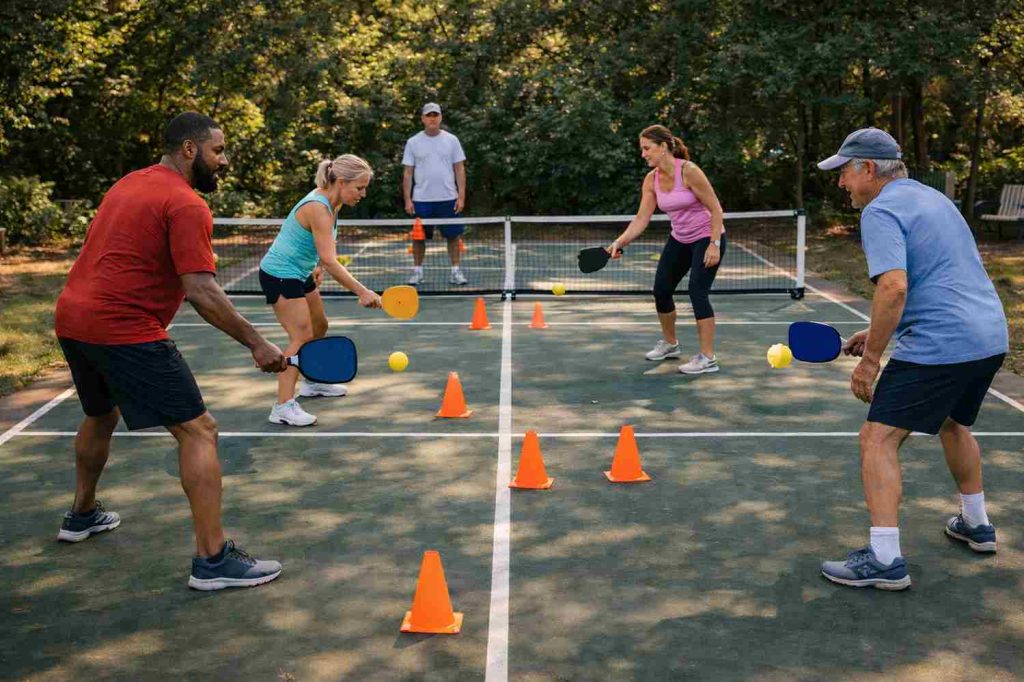
Pickleball games for beginners emphasize learning the basics in a low-pressure environment. Fundamental drills, such as forehand and backhand exercises, focus on paddle grip, footwork, and consistent ball contact.
Target practice using cones or markers enhances accuracy, while rally games encourage long exchanges to build rhythm. Modified rules, such as extra bounces or relaxed kitchen (non-volley zone) enforcement, help novices gain confidence before formal competition.
Learning-focused exercises like dinking drills—soft shots into the non-volley zone—teach control and tactical thinking. Service and return practice isolates key components of gameplay, while rotating partners exposes beginners to different playing styles.
Clinics, instructional videos, and beginner leagues provide structured guidance. These pickleball games for beginners bridge the gap between casual play and organized competition, allowing players to develop skills, enjoy social interactions, and transition smoothly into broader pickleball communities.
Pickleball Games for Kids
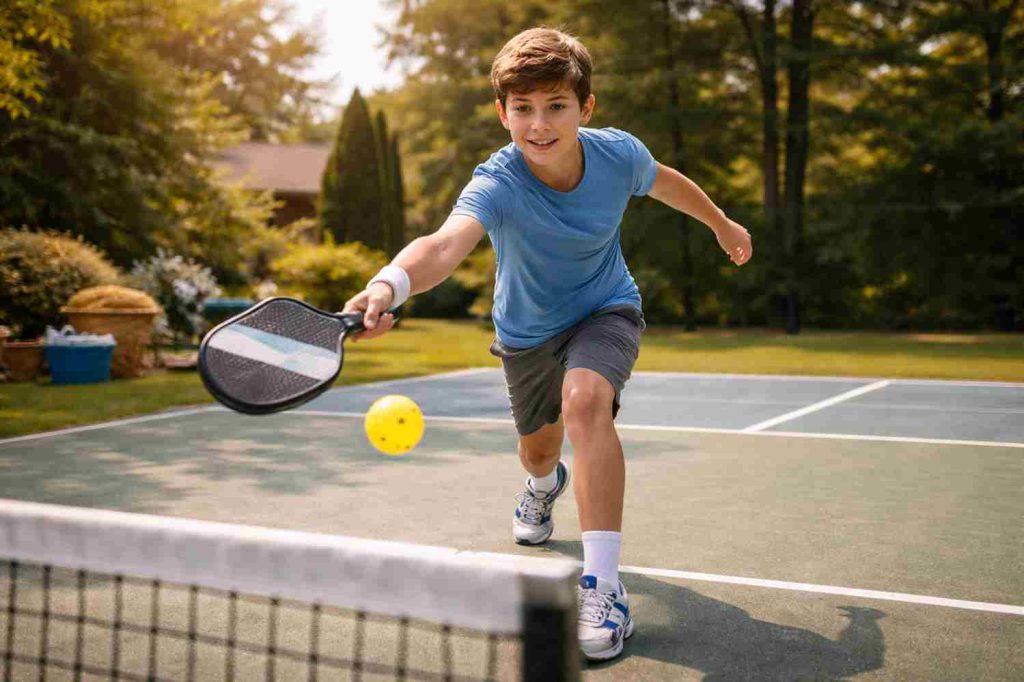
Pickleball games for kids introduce the sport in a safe, fun, and educational context. Adaptations such as “Fry the Egg,” “Sneaky Chipmunk,” and “Hit-the-Target” teach precision, hand-eye coordination, and agility through imaginative play.
Softer balls, smaller paddles, and shortened courts ensure safety and accessibility for children ages 5–12. Relay-style games, team-based challenges, and creative scoring systems encourage cooperation and foster a sense of accomplishment.
Games like “Don’t Drop the Dinner” or “Giraffes and Snakes” build motor skills while instilling sportsmanship. Frequent rotations and activity breaks maintain engagement for shorter attention spans.
Early exposure to pickleball promotes confidence, lifelong fitness habits, and family involvement, connecting children to a growing community with over 13.6 million nationwide participants as of 2023. By making play enjoyable, these pickleball games for kids develop foundational skills while encouraging a lifelong appreciation for physical activity.
Fun Pickleball Games for Adults
Fun pickleball games for adults elevate traditional matches through creativity, strategy, and social interaction. Popular variations include:
- King of the Court: Winners defend their side while challengers rotate, combining competitiveness with quick turnovers.
- Around the World: Players rotate positions after points, testing adaptability and endurance.
- Popcorn Pickleball: Rapid net volleys improve reflexes in an energetic format.
- Pickleball Baseball: Assigns court zones as “bases” and advances players after successful shots.
- Dink Only: Restricts play to the non-volley zone, emphasizing patience and control.
Other variations include “Skinny Singles” for one-on-one play on half-courts and “Drop First to Score,” promoting strategic shot placement. These fun pickleball games for adults support both recreational and competitive engagement, improve fitness, and reinforce social bonds, catering to mixed skill levels and group sizes.
Rules of Pickleball Games
Pickleball rules provide a structured framework ensuring fair play and strategic depth. The standard court is 20 by 44 feet, with a net height of 36 inches at the posts and 34 inches in the center. Games are typically played to 11 points, winning by at least two. Serves are underhand and must clear the non-volley zone. Doubles alternates serves between partners, while the two-bounce rule ensures extended rallies.
Faults include hitting out of bounds, touching the net, or volleying in the non-volley zone. Optional modifications simplify play for beginners, while official matches follow strict regulations per the 2026 USA Pickleball Rulebook. Equipment and conduct standards maintain consistency across levels, supporting both recreational enjoyment and competitive integrity.
Equipment Needed
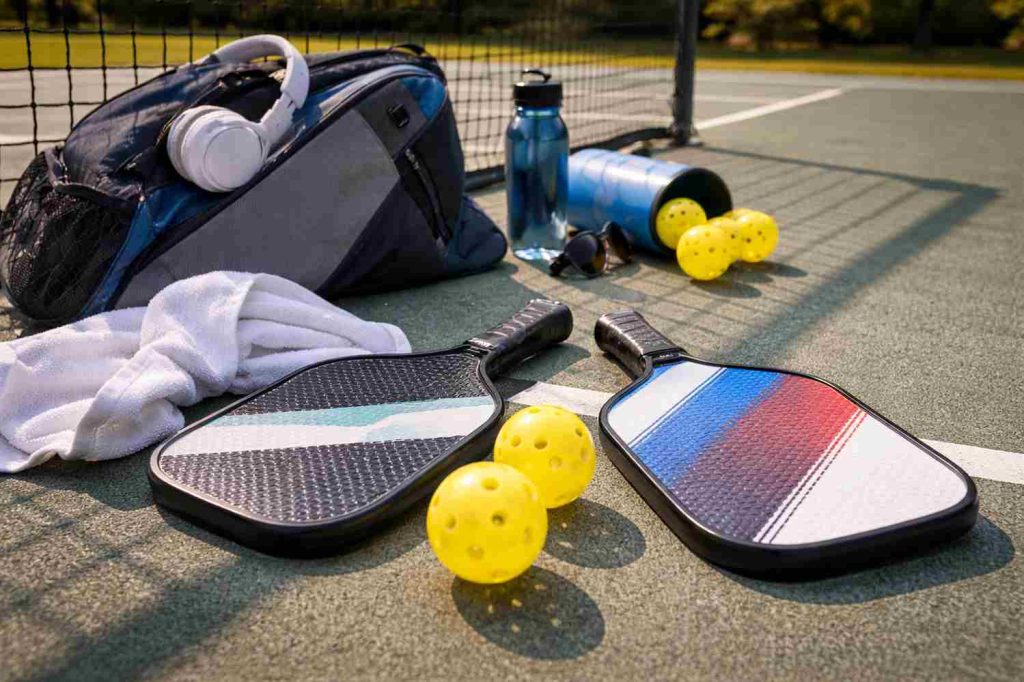
Essential equipment includes paddles, balls, nets, and supportive gear. Paddles range from 7–8 ounces for beginners to heavier models for advanced players. Composite materials like fiberglass or graphite enhance control and power. Balls are perforated plastic; indoor balls have larger holes for slower play, outdoor balls smaller for wind resistance. Nets are 22 feet wide and adjustable in height.
Court shoes with lateral support prevent injuries, while accessories like overgrips, visors, and carrying bags enhance comfort and performance. Starter kits are available under $50, with advanced paddles exceeding $100. Proper equipment ensures safe, effective, and enjoyable pickleball games for all ages and skill levels.
Pickleball Games Online
Digital platforms provide virtual alternatives for practice and entertainment. Free browser-based games like Super Pickleball Adventure and VR simulations like Pickleball One offer immersive experiences, improving timing, strategy, and reflexes.
Mobile apps such as Pickleball Smash or PB Vision simulate real-game scenarios, while DUPR connects players online for challenges and skill tracking. These pickleball games online free enable practice and social interaction when physical courts are unavailable.
Scheduling and Finding Pickleball Games
Apps streamline finding and scheduling pickleball games. Platforms like PlayTime Scheduler and Pickleheads allow users to locate courts, organize sessions, join groups, and manage payments. DUPR, PicklePlay, and CourtReserve integrate reservations, player matching, and notifications, making it easy to find pickleball courts near me or set up games efficiently. These pickleball game scheduler tools ensure accessibility and convenience for players of all levels.
Top 10 Variations of Pickleball Games
| Variation | Age Groups | Skill Levels |
|---|---|---|
| Skinny Singles | Teens-Adults | Beginner-Advanced |
| Dingles | Kids-Adults | Intermediate |
| Drop & Dink | All Ages | Novice-Advanced |
| Around the World | Adults-Seniors | Beginner |
| Pickleball Baseball | Kids-Teens | Beginner |
| Dink Only | Adults | Intermediate |
| Drop First to Score | Teens-Adults | Beginner-Intermediate |
| Popcorn Pickleball | Adults | Advanced |
| Four-Square | Kids | Novice |
| Triangle Dinks | All Ages | Beginner |
These formats cater to pickleball games for seniors, kids, and adults, ensuring inclusivity and engagement across skill levels.
Top Competitors of Pickleball in the USA
Professional pickleball athletes set benchmarks for skill and strategy. Men’s leader Ben Johns dominates PPA Tour doubles with unmatched consistency, while Gabriel Tardio complements him with reflexive power. In women’s categories, Anna Leigh Waters excels in speed and precision, followed by Kate Fahey in singles.
International rankings via DUPR highlight players like JW Johnson, Hayden Patriquin, and Anna Bright, each demonstrating unique strengths and areas for growth. These competitors drive innovation, setting standards for recreational and professional pickleball games.
Conclusion
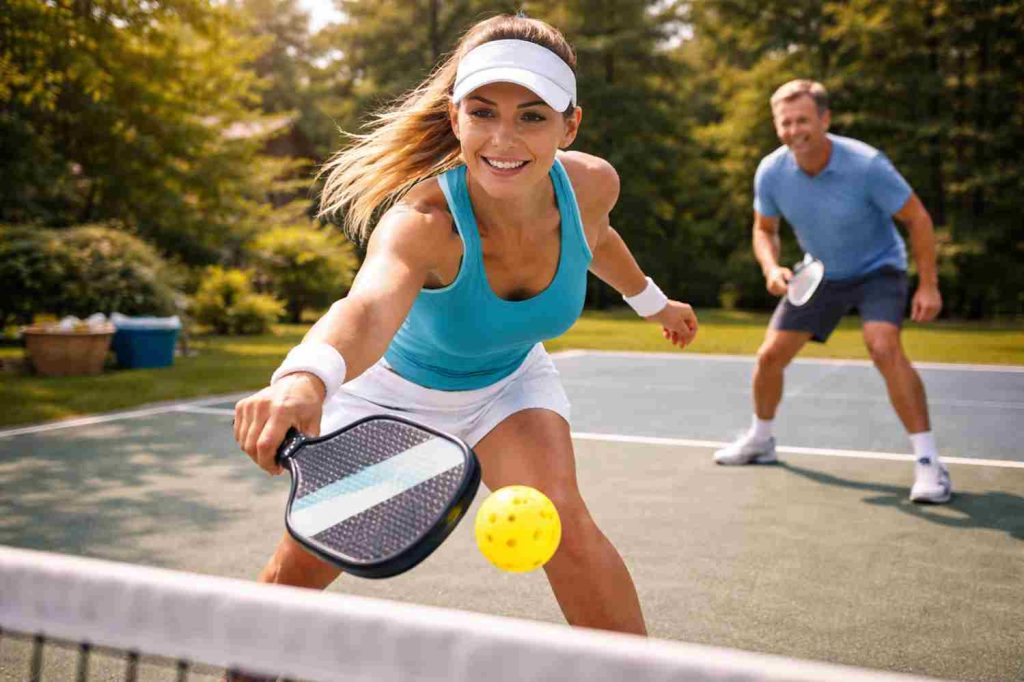
Pickleball games thrive due to their versatility, inclusivity, and accessibility. From its 1965 origins to projections exceeding 25 million players by 2026, the sport appeals to children, adults, and seniors alike. Beginner drills, fun adaptations for kids, and competitive adult variations foster skill development, fitness, and social connection.
Rules are simple yet strategic, and quality equipment ensures safe play. Online platforms and scheduling apps broaden reach, while professional tours inspire aspirants. The social and physical benefits are profound: community building, cardiovascular health, balance, coordination, and mental agility.
Emerging trends include AI coaching, digital integration, and international expansion. Visualizing participation trends alongside online and offline engagement demonstrates the sport’s dual evolution. Pickleball games will continue attracting new generations while retaining veteran players, ensuring a vibrant, health-oriented, and inclusive future.
Frequently Asked Questions

Jordan Blake
Jordan Blake is a racket-sports author with hands-on experience and a strong command of both tennis and pickleball. With a foundation built through years on the tennis court and a successful transition into competitive pickleball, Jordan brings practical insight, strategic clarity, and real-world understanding to every article.
Drawing on personal play, match analysis, and court-level observation, Jordan specializes in breaking down technique, tactics, and the mental aspects of both sports in a clear, data-informed, and accessible way. His dual-sport perspective helps readers understand how skills transfer between games—and where each sport demands its own distinct mastery.