
Padel Court Dimensions: Official Size, Layout, and Standards (Complete USA Guide)
Padel is one of the fastest-growing racket sports in the world, expanding rapidly across Europe, Latin America, and now the United States. As clubs, real estate developers, and municipalities invest in padel facilities, one factor determines whether a court is playable, safe, and regulation-ready: correct padel court dimensions.
Whether you are a player, coach, architect, contractor, or investor, understanding official padel court size and layout is essential. Incorrect dimensions can affect gameplay, safety, tournament eligibility, and long-term durability.
This guide provides a clear, authoritative, and practical explanation of official padel court dimensions, based on standards set by the International Padel Federation (FIP). It also covers wall specifications, clearance requirements, construction guidance, costs, and future trends relevant to the U.S. market.
Quick Reference: Official Padel Court Specifications
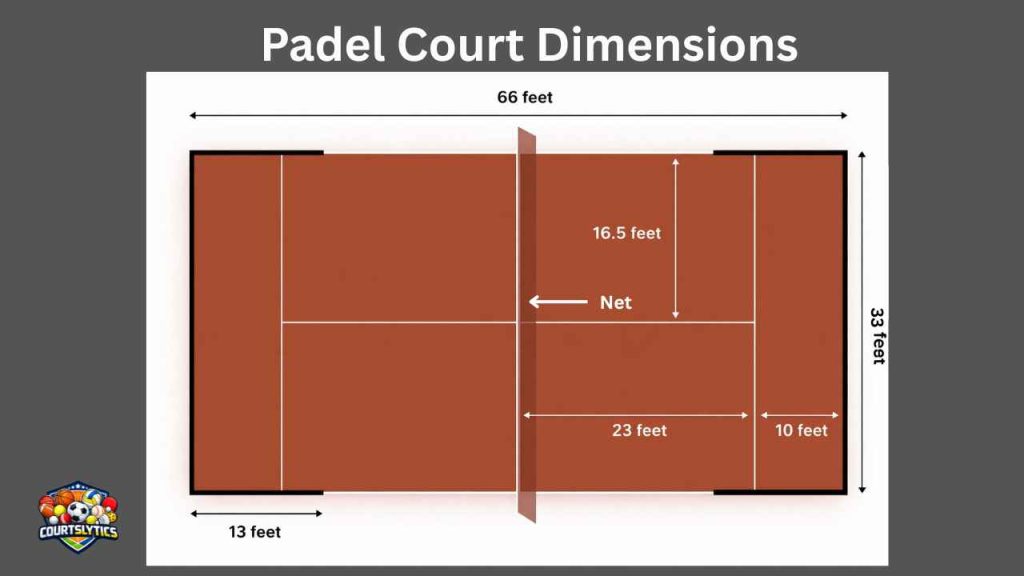
These dimensions apply universally to recreational, league, and professional padel courts worldwide.
History and Standardization of Padel Court Dimensions
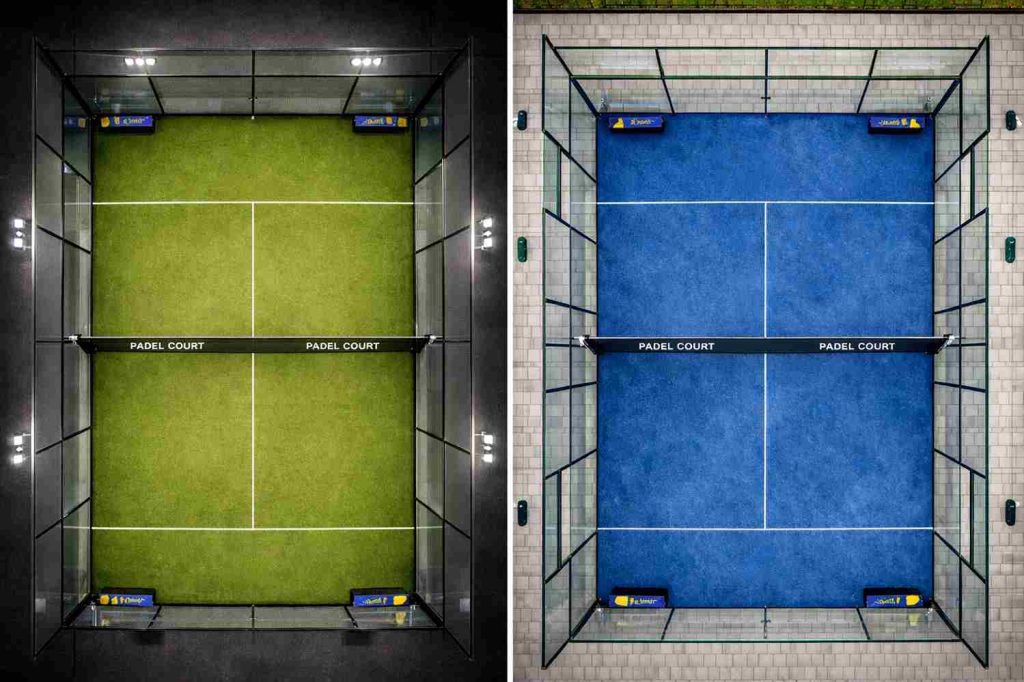
Padel was invented in 1969 in Mexico by Enrique Corcuera, who adapted tennis to a smaller, enclosed space where walls were intentionally part of the game. As the sport spread to Spain and Argentina, competitive play highlighted the need for standardized rules and dimensions.
This led to the adoption of uniform court specifications under the International Padel Federation (FIP). Today, padel court dimensions are identical across countries and competition levels, allowing players to transition seamlessly between clubs and tournaments worldwide.
This global consistency is one of the main reasons padel has scaled so quickly.
Official Padel Court Dimensions
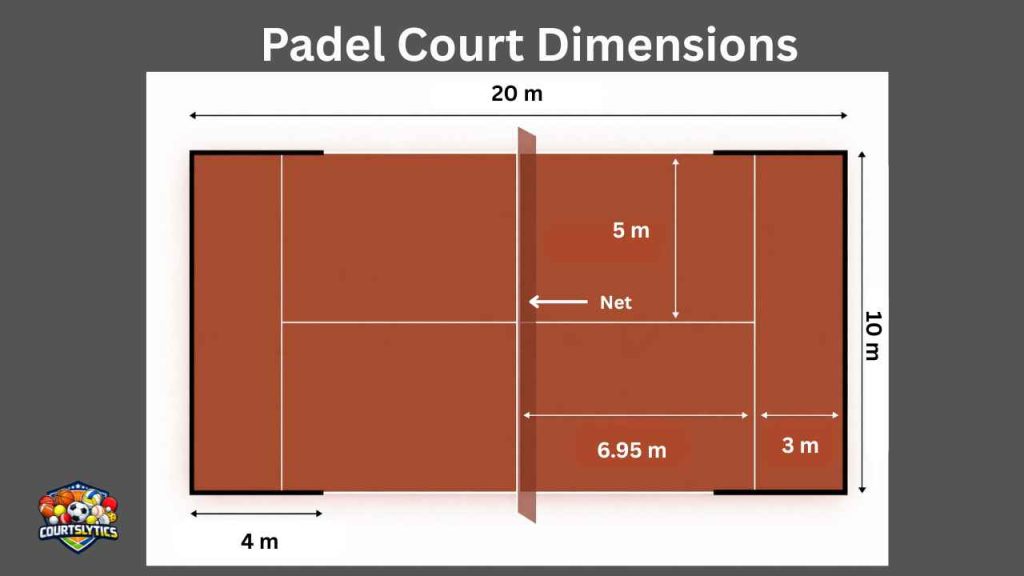
A regulation padel court measures 10 meters wide and 20 meters long (approximately 32.8 × 65.6 feet). These measurements include all playing boundaries and encompass the enclosed space created by walls and fencing.
The same court dimensions are used for both recreational and competitive play, ensuring consistency across clubs, leagues, and international tournaments.
Padel Court Net Dimensions and Positioning
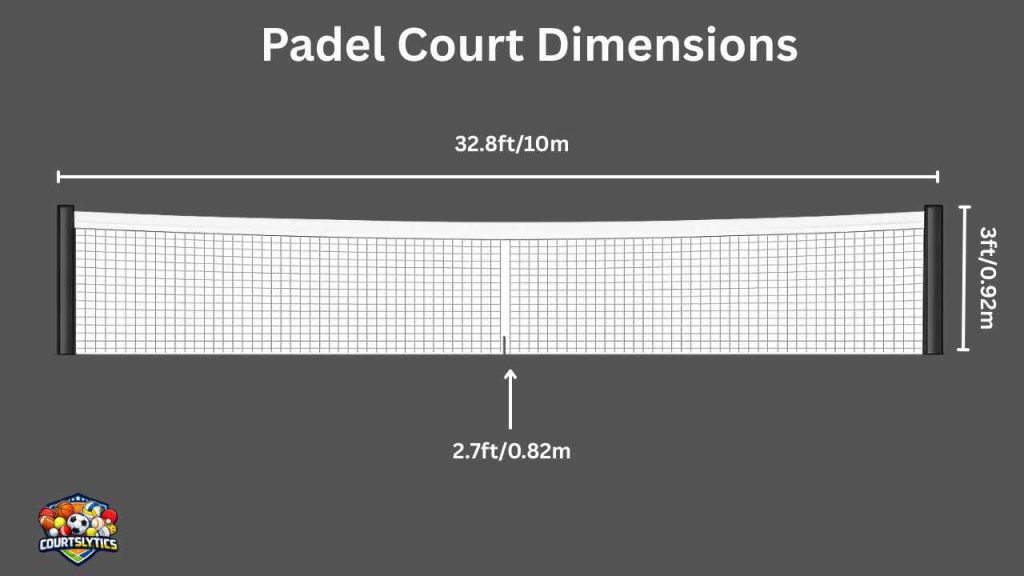
According to FIP (International Padel Federation) standards, padel nets must meet strict dimensional and material requirements to ensure consistent and fair play. The net is required to extend across the entire 10-meter (32 ft 10 in) width of the court, fitting securely between the posts with no open spaces at either end.
In terms of height, the net should measure 0.88 meters (2 ft 11 in) at the midpoint and rise slightly to 0.92 meters (3 ft) at the posts. It is held in position by a metal tension cable, which must not exceed 0.39 inches in thickness, ensuring stability without obstructing play.
The top of the net must feature a white horizontal band, typically 2 to 2.5 inches wide, improving visibility for players and officials. Constructed from durable synthetic fiber, the net’s mesh is designed to be tight enough to stop the ball from passing through while remaining flexible and weather-resistant for long-term use.
Court Lines and Service Areas
Padel court lines define service areas and boundaries while maintaining a clean layout.
- All lines are 5 cm (2 inches) wide
- Lines are considered part of the playing area
- High-contrast colors improve visibility
Each half of the court contains two service boxes, divided by a center service line. The service line is located 6.95 meters from the net, and all serves must be performed underhand after one bounce. Precise line placement is critical, as incorrect markings can invalidate serves and affect competitive fairness.
Walls and Enclosures: Core to the Game
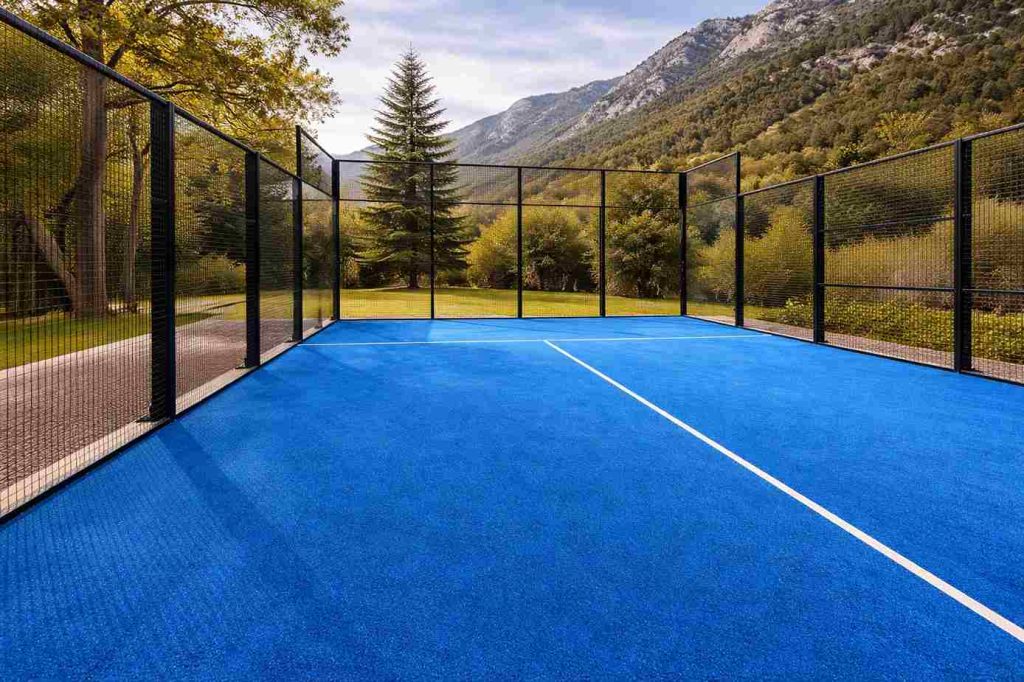
Unlike tennis or pickleball, padel walls are an active part of gameplay.
Back Walls
- Total height: 4 meters (13.1 ft)
- Lower 3 meters (9.8 ft) must be solid (usually tempered glass)
- Upper 1 meter (3.3 ft) may be metal mesh
Side Walls
- Rear section: 3 meters high (9.8 ft)
- Front section: 2 meters high (6.6 ft)
- Mesh fencing extends upward to reach 4 meters total height (13.1 ft)
Balls may rebound off the walls after bouncing on the court, enabling longer rallies and strategic shot-making.
Required Clearance and Total Space
While the playing area is 10 × 20 meters (32.8 × 65.6 ft), additional space is essential for safety and usability.
- Minimum clearance: 0.5–1 meter (1.6–3.3 ft) around the court
- Ideal total footprint: 12 × 22 meters (39.4 × 72.2 ft) or larger
Indoor Ceiling Height
- Minimum: 6 meters (19.7 ft)
- Recommended: 8–10 meters (26.2–32.8 ft) (especially for competitive play)
Adequate clearance improves player movement, lighting quality, and long-term safety.
Playing Surface Specifications
Padel courts use surfaces designed to balance grip, slide, and ball response. Common surface systems include:
- Artificial turf with sand infill
- Textured acrylic systems
- Cushioned synthetic layers
A compliant surface must provide consistent bounce and controlled traction. Poor surface quality increases injury risk and negatively affects playability.
Indoor vs Outdoor Padel Courts
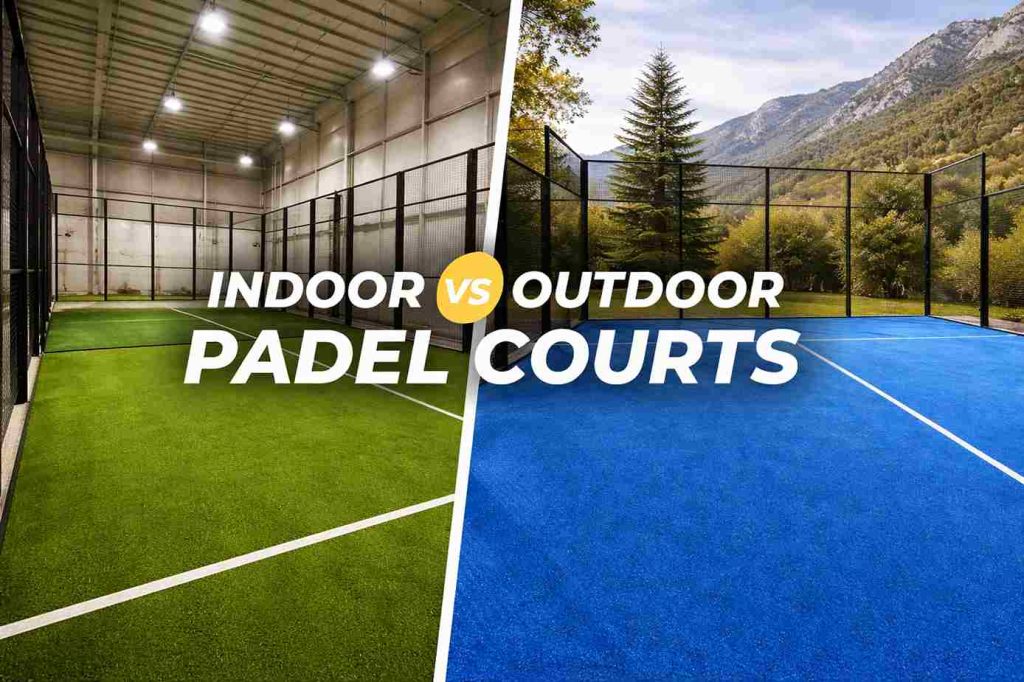
Padel court dimensions remain identical for indoor and outdoor courts.
Indoor courts require:
- Controlled lighting (typically 500–750 lux)
- Higher ceilings (minimum 6 m / 19.7 ft, recommended 8–10 m / 26.2–32.8 ft)
- Climate management to maintain comfortable temperature and humidity
Outdoor courts require:
- UV-resistant materials for walls and turf
- Weatherproof playing surfaces such as artificial turf
- Proper drainage systems to prevent water accumulation and damage
In the U.S., indoor padel is growing rapidly due to climate control, extended play hours, and noise management, making indoor facilities increasingly popular in urban and recreational settings.
Padel Court Size Compared to Other Sports
How to Build a Padel Court: Step-by-Step Overview
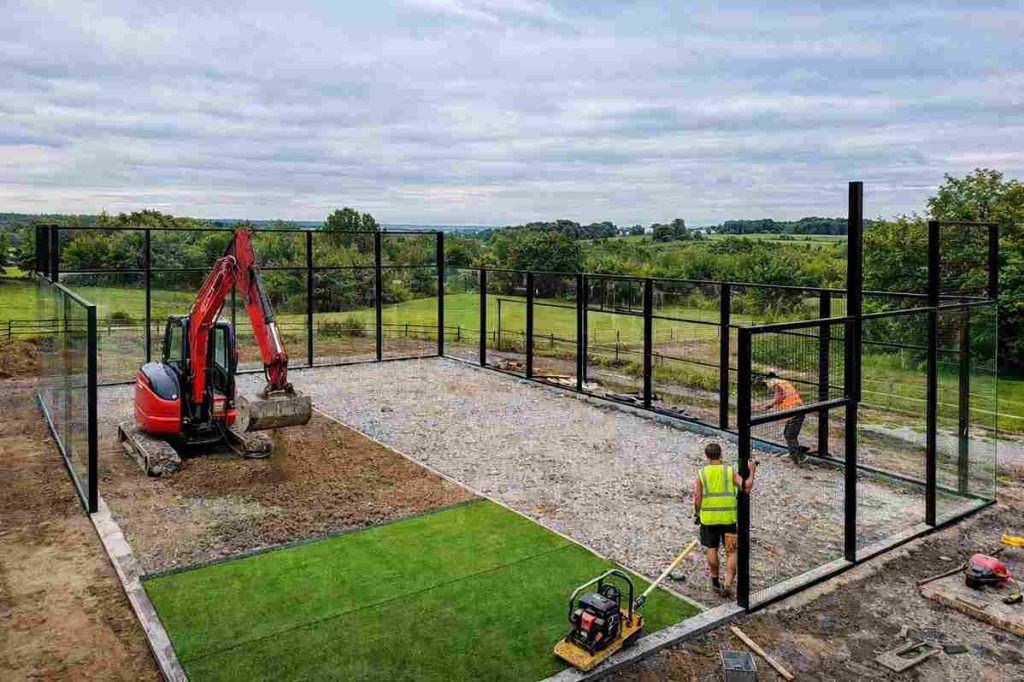
Building a padel court requires careful planning, precision, and adherence to official dimensions. Whether constructing an indoor or outdoor facility, following step-by-step procedures ensures safety, regulation compliance, and optimal gameplay.
Step 1: Choose the Right Location
Select a level, stable area with enough space for the 10 × 20 meter court plus at least 0.5–1 meter of clearance on all sides. Consider sunlight exposure, drainage, accessibility, and whether the facility will be indoor or outdoor. Indoor setups require adequate ceiling height (minimum 6 meters, ideally 8–10 meters).
Step 2: Prepare and Level the Surface
Clear the site of debris, vegetation, or loose soil. Grade and level the ground for uniformity. Install a solid concrete foundation with proper drainage to prevent water accumulation and ensure long-term court stability.
Step 3: Install the Structural Enclosure
Set up tempered glass panels for the back and part of the side walls, and secure metal mesh fencing for the upper walls. Ensure walls are perfectly vertical and meet official height specifications (back wall: 4 meters; side walls: 3 meters rear, 2 meters front, mesh to 4 meters total).
Step 4: Install the Playing Surface
Lay artificial turf, acrylic, or cushioned synthetic surfaces. Level carefully and ensure even sand infill if applicable. The surface should provide consistent bounce, grip, and player safety.
Step 5: Measure and Mark Court Lines
Accurately mark all court lines according to official FIP specifications. Lines are 5 cm wide and include baselines, service boxes, and the center service line (6.95 meters from the net). High-contrast paint ensures visibility.
Step 6: Install the Net System
Install a net dividing the court into two halves, 10 meters wide. Net height must be 0.88 meters at the center and 0.92 meters at the sides. Proper tension ensures fair play and safety.
Step 7: Add Optional Features
Enhance the facility with lighting, fencing, seating, and wind or noise-reduction systems. For multi-court setups, maintain at least 1 meter between courts. Indoor courts may require padding or additional wall protection.
Careful planning, adherence to regulations, and professional installation minimize maintenance issues and create a high-quality, playable padel court for years of enjoyment.
Common Mistakes When Marking Padel Court Dimensions
One of the most common construction mistakes is incorrect wall height or alignment. Padel walls are integral to the gameplay, not merely decorative barriers, and even minor deviations can negatively affect ball rebound, rally flow, and player safety. Common errors include back walls built below the official 4 meters, uneven transitions between glass panels and mesh fencing, or glass panels that are not perfectly vertical.
Another frequent mistake is misalignment of the service boxes or net height inconsistencies, which can render courts unsuitable for competitive play. Contractors often rely on standard tennis or squash specifications, neglecting the unique characteristics of padel. Inadequate clearance around the court can also limit player movement and increase injury risks.
Finally, improper turf installation or insufficient drainage for outdoor courts can drastically reduce court lifespan. Hiring contractors experienced in padel-specific construction and adhering strictly to FIP standards is essential to avoid these pitfalls and ensure a safe, high-quality playing experience.
Cost Breakdown and Market Insights (USA)
Constructing a padel court involves multiple cost components. Foundation and drainage typically range between $15,000 and $30,000, ensuring a level base and proper water management. Glass walls and steel structure can cost $20,000–$40,000 depending on material quality and design. Playing surfaces, such as artificial turf or acrylic layers, add $10,000–$20,000, while lighting and accessories range from $5,000–$15,000.
Indoor courts cost more due to roofing, climate control, and enhanced lighting requirements, but they allow year-round usage and higher revenue potential. In the U.S., padel’s popularity is growing rapidly, particularly in urban areas where space-efficient courts appeal to clubs and recreational facilities.
The high utilization rate of padel courts and potential for leagues, tournaments, and coaching sessions make the investment attractive. Market trends indicate steady demand growth, particularly for indoor facilities. While upfront costs are significant, long-term returns, combined with minimal maintenance, make padel courts a viable and profitable sports infrastructure investment.
Maintenance and Court Lifespan
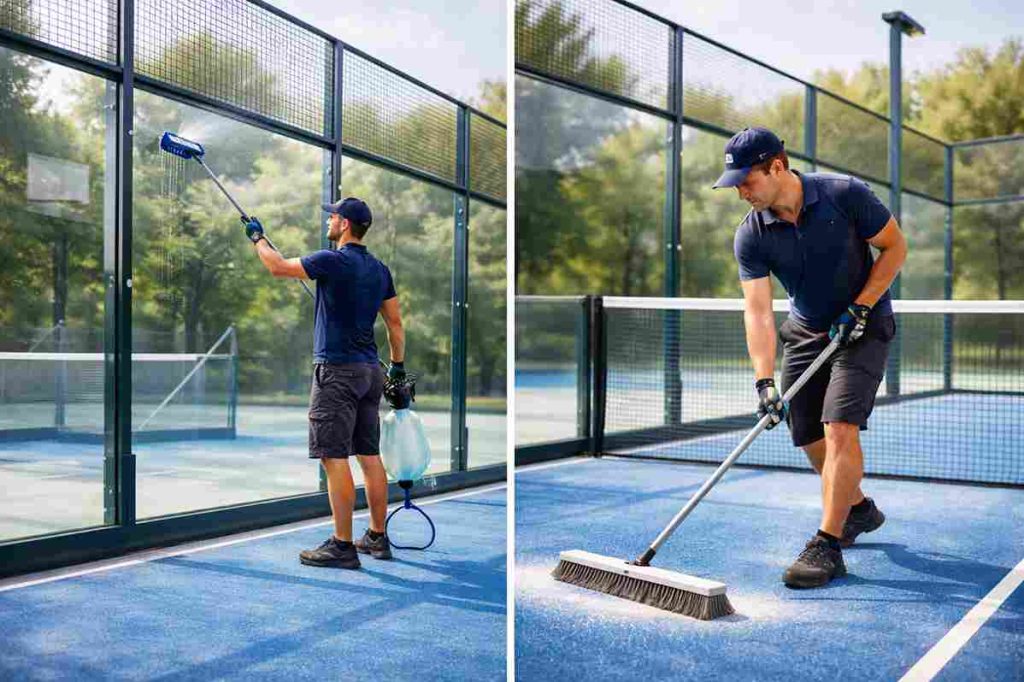
Proper maintenance is crucial for extending padel court lifespan and ensuring player safety. Weekly surface cleaning removes debris and prevents turf damage or slipperiness. Monthly inspection of glass walls and structural components ensures no cracks, loose panels, or safety hazards exist. Annual maintenance involves turf brushing, sand infill adjustments, and surface leveling to maintain consistent ball bounce and traction.
Indoor courts require monitoring of lighting systems, climate control, and humidity levels to protect structural elements and surfaces. Outdoor courts need periodic checks for drainage effectiveness, UV damage, and weathering. With consistent maintenance, a padel court can remain fully playable for 15–20 years.
Neglecting regular upkeep leads to faster surface degradation, unsafe conditions, and costly repairs. Investing in a proper maintenance plan, along with scheduled inspections and professional servicing, ensures maximum usability, safety, and long-term performance, whether the facility is for recreational or professional use.
.
2026 Updates and Future Trends
As of 2026, there have been no changes to official padel court dimensions; the standard 10 × 20 meter court remains central to the sport. However, innovation in court design, materials, and technology is influencing the industry.
Indoor facilities are expanding rapidly in the U.S., offering controlled lighting, climate management, and extended play hours. Noise-reduction wall systems are becoming increasingly common, improving the experience for players and nearby residents.
Smart technology integration, including digital scoring, automated lighting, and player analytics, is shaping the next generation of padel venues. Advanced surface materials, such as eco-friendly synthetic turf and cushioned acrylic systems, are enhancing player comfort while reducing maintenance requirements.
Padel clubs are also exploring multi-court facilities and modular layouts to optimize space utilization and revenue potential. With growing popularity in North America, future trends point to standardized courts combined with modern amenities, ensuring both high-level competition and recreational enjoyment. Investors and facility managers who adopt these innovations are likely to see stronger engagement and long-term returns.
Conclusion-Padel Court Dimensions
Understanding and adhering to official padel court dimensions is essential for creating a playable, safe, and regulation-compliant facility. The 10 × 20 meter court, with precise wall, net, and line specifications, is designed to support consistent gameplay and enable both recreational and competitive play.
Whether building indoors or outdoors, careful attention to clearance, surface materials, structural integrity, and maintenance ensures optimal player experience and longevity of the court.
In the United States, padel’s rapid growth is driving demand for both indoor and outdoor courts, modern amenities, and smart technology integration. Facility owners, investors, and clubs must weigh construction costs, material quality, and long-term maintenance to maximize utilization and revenue.
Common mistakes, such as incorrect wall heights or misaligned service boxes, highlight the importance of specialized contractors with padel experience.
Looking ahead, innovations in lighting, surface materials, and digital scoring systems will enhance the sport’s appeal while maintaining the core dimensions set by the International Padel Federation. By combining adherence to standard dimensions with modern enhancements, players and facility managers can ensure a safe, enjoyable, and future-ready padel environment, helping the sport continue its impressive global expansion.
Frequently Asked Questions

Jason Miller
Jason Miller is a padel-focused sports writer with hands-on experience across competitive and recreational play. With years spent training, competing, and studying match dynamics on modern padel courts, Jason brings a practical, player-first perspective to every piece he writes.
His expertise lies in analyzing padel-specific strategy, including court positioning, wall usage, net control, and partner communication. By combining real-game observation with technical breakdowns, Jason delivers clear, actionable insights that help players improve decision-making, consistency, and match awareness.
Jason’s writing emphasizes what truly wins points in padel—smart shot selection, tactical patience, and teamwork—making his content valuable for players at all levels. His straightforward, analytical approach has made his work a trusted resource for those looking to better understand and elevate their padel game.
