Table Tennis Table Dimensions: The Complete Guide to Official Sizes and Space Requirements
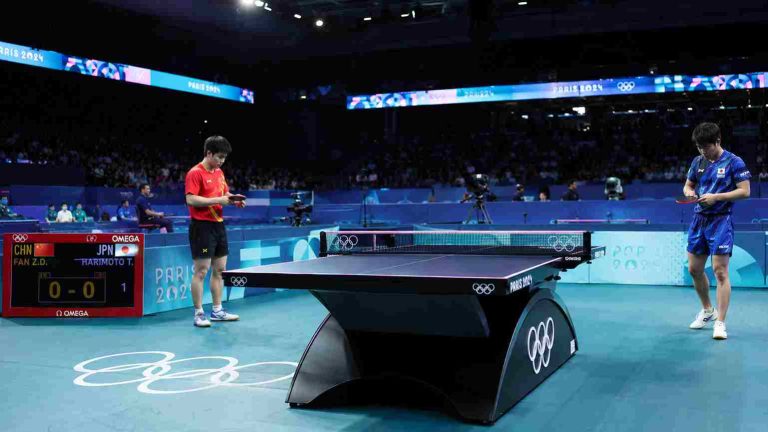
Official table tennis table dimensions are carefully standardized to create fair and consistent gameplay for players around the world. A regulation table measures 9 feet long, 5 feet wide, and 30 inches high (2.74m × 1.525m × 76cm), and these measurements are used in tournaments, clubs, schools, and recreational setups alike.
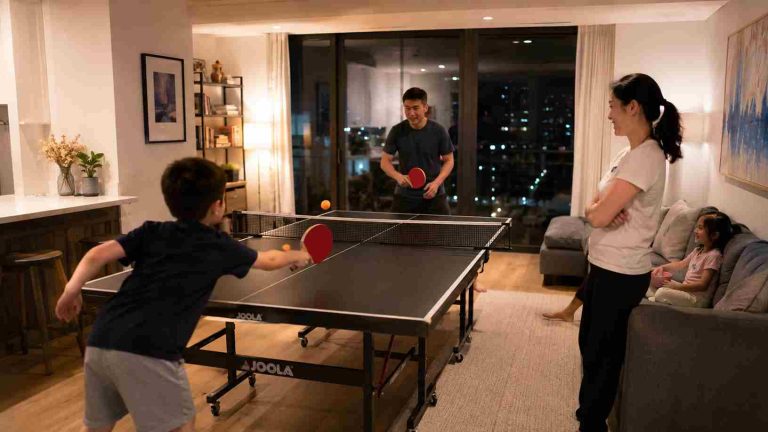
Understanding the correct size is important for more than just buying a table. The dimensions directly influence movement, rally quality, shot placement, spin control, and overall playing comfort. Many people purchase a table without checking room clearance or ceiling height first, which often results in cramped gameplay and limited movement around the playing area.
Whether you are building a dedicated game room, choosing a family recreation table, or comparing full-size and compact options, knowing the official specifications helps you make a smarter decision. In this complete guide, you’ll learn the standard measurements in feet, inches, centimeters, and millimeters, along with room size recommendations, net specifications, setup advice, and practical tips for selecting the ideal model for your space and playing style.
Quick Answer: Standard Size at a Glance
According to International Table Tennis Federation (ITTF) regulations, a regulation playing surface follows fixed international measurements.
Quick Facts
- Used in professional tournaments worldwide
- Same measurements for indoor and outdoor models
- Surface must remain perfectly level
- Matte finishes improve ball visibility
- Dark blue and green are the most common colors
Official Table Tennis Table Dimensions
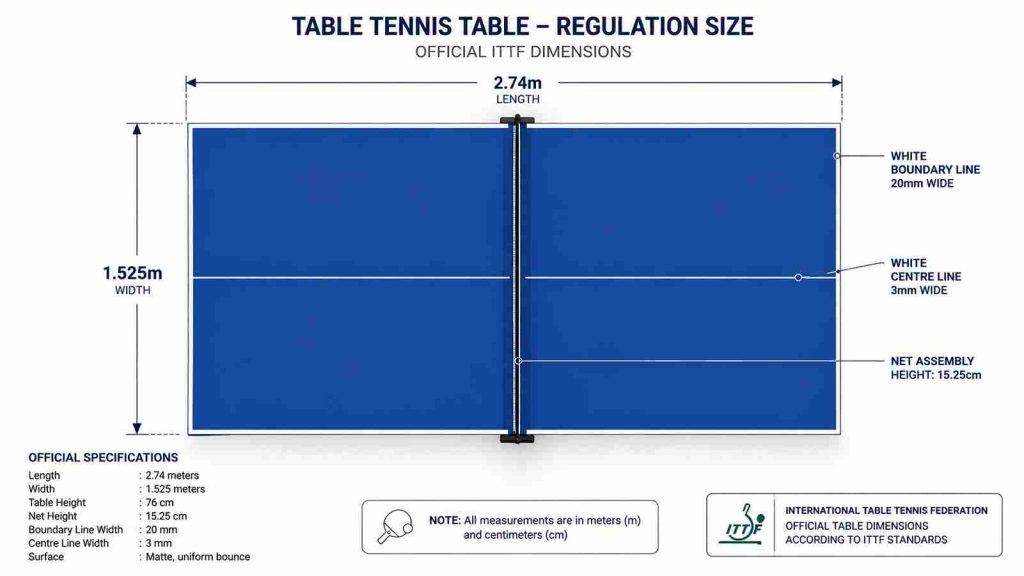
The International Table Tennis Federation regulates official measurements to ensure every competition table delivers a consistent playing experience.
Regulation Measurements
A regulation model must follow these exact specifications:
- Length: 2.74 meters (9 feet)
- Width: 1.525 meters (5 feet)
- Height: 76 centimeters (30 inches)
The surface must be rectangular, evenly level, and designed to produce consistent bounce across the entire playing area.
Surface Markings
Official models also include:
- white edge lines,
- a center line for doubles matches,
- and a matte surface finish.
Glossy finishes are generally avoided because reflections can make it harder to track the ball during fast rallies.
Why Standardization Matters
Consistent sizing allows players to:
- develop reliable shot timing,
- improve footwork,
- and practice realistic match conditions.
Smaller recreational tables can still be fun, but they do not accurately reproduce tournament gameplay.
Suggested Image Placement:
Image Type: Top-down regulation table diagram
Placement: After this section
Alt Text: Official table tennis playing surface dimensions with labels
Dimensions in Feet, Inches, CM, and MM
Different manufacturers use different measurement systems, so understanding conversions can make product comparisons easier.

These official measurements remain the same for professional tournaments, clubs, schools, and most high-quality home tables.
Understanding Measurement Conversions
Manufacturers may advertise products using:
- metric measurements,
- imperial measurements,
- or both systems together.
Checking conversions carefully helps avoid confusion when shopping online.
Suggested Image Placement:
Image Type: Measurement conversion infographic
Placement: Under the table
Alt Text: Ping pong table measurements in feet inches centimeters and millimeters
Table Height and Net Specifications

Besides overall size, the height of both the surface and net are important parts of regulation play.
Official Playing Height
The playing surface stands exactly:
- 76 cm
- or 30 inches
above the floor.
This height supports proper playing posture while allowing consistent stroke mechanics for players of different skill levels.
Net Specifications
The net must:
- measure 15.25 cm (6 inches) high,
- stretch across the full width,
- and extend slightly beyond each side.
Even small net height differences can affect serves, spin, and rally consistency.
Surface Thickness and Bounce Quality
Bounce consistency depends heavily on tabletop thickness.
Professional players usually prefer thicker surfaces because they provide more reliable bounce and better durability.
Suggested Image Placement:
Image Type: Side-view height diagram
Placement: After this section
Alt Text: Regulation net height and playing surface height illustration
How Much Space Do You Need Around the Table?
The playing surface itself is only part of the setup. Comfortable gameplay also requires enough surrounding movement space.
Recommended Room Sizes

Why Extra Space Matters
Additional room allows players to:
- return wide shots,
- move comfortably,
- play defensive rallies,
- and react naturally during fast exchanges.
Tight spaces often limit movement and reduce enjoyment.
Ceiling Height Recommendations
Ceiling clearance also matters, especially for players who use lobs or defensive shots.
Recommended ceiling heights:
- Minimum: 8 ft
- Comfortable: 9–12 ft
- Professional venues: 16 ft or higher
Storage Space Considerations
If you choose a foldable model, leave extra room for:
- folded storage,
- wheel movement,
- and safe access around the table.
Suggested Image Placement:
Image Type: Room spacing layout illustration
Placement: Below room size table
Alt Text: Recommended playing space around a regulation ping pong table
Full-Size vs Mid-Size vs Mini Tables

Different table sizes suit different homes and playing needs.
Full-Size Tables
Regulation-size models provide:
- realistic ball bounce,
- authentic spin response,
- and proper movement patterns.
These are best for serious improvement and competitive training.
Mid-Size Options
Mid-size versions are popular because they:
- fit smaller rooms,
- cost less,
- and remain enjoyable for casual games.
Mini Tables
Mini models work well for:
- children,
- offices,
- and portable entertainment setups.
However, they do not fully replicate tournament-style gameplay.
Suggested Image Placement:
Image Type: Size comparison visual
Placement: After comparison chart
Alt Text: Full-size mid-size and mini table comparison graphic
Indoor vs Outdoor Models
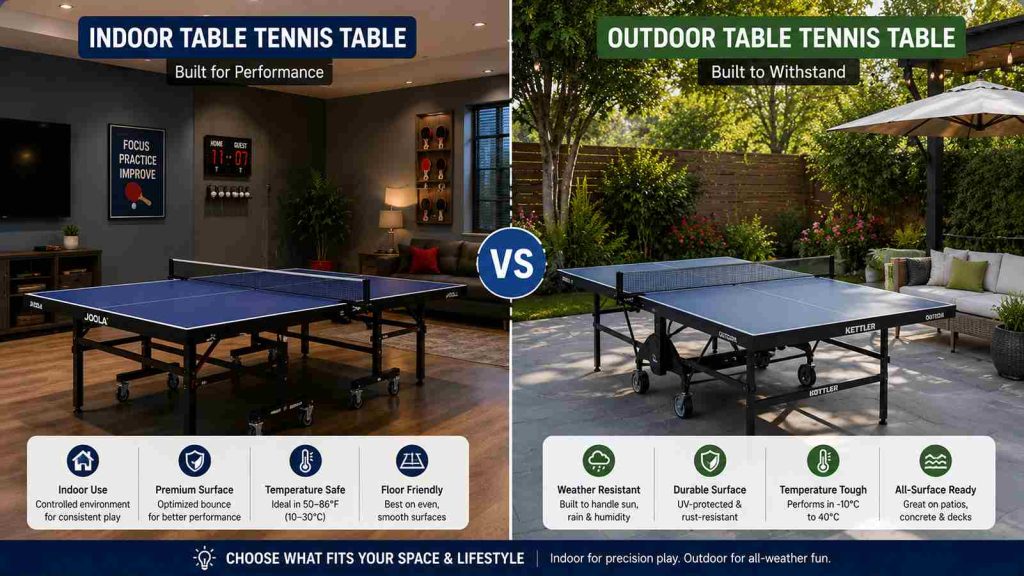
Indoor and outdoor versions follow the same official playing measurements, but their construction materials differ significantly.
Indoor Tables
Indoor models usually provide:
- smoother playing surfaces,
- better spin response,
- and more consistent bounce.
They are preferred for training and competitive practice.
Outdoor Tables
Outdoor models are designed with:
- weather-resistant surfaces,
- rust-protected frames,
- and stronger coatings.
These features help the table handle sunlight, moisture, and temperature changes more effectively.
Common Mistakes When Buying a Table

Many buyers focus only on price and overlook important setup details.
Mistakes to Avoid
- Buying a full-size table without measuring the room
- Ignoring movement space around the playing area
- Forgetting ceiling height clearance
- Choosing very thin playing surfaces
- Buying unstable folding frames
- Ignoring wheel quality and portability
- Forgetting doorway or staircase access
- Placing the table on uneven flooring
Even a high-quality model can perform poorly if the setup area is too cramped or uneven.
Expert Tips for Setup and Selection

Measure Your Space First
Always measure:
- room length,
- room width,
- ceiling height,
- and storage space before purchasing.
Choose Better Surface Thickness
For most home users:
- 16–19mm surfaces provide good value,
- while 22–25mm tops offer tournament-level bounce.
Consider Foldable Models
Foldable designs are useful for:
- garages,
- apartments,
- and multipurpose rooms.
Prioritize Stability
Heavy-duty frames reduce vibration and improve consistency during fast rallies.
Avoid Extremely Cheap Tables
A quality mid-range model often performs better than a very cheap full-size version with weak bounce consistency.
Test Bounce Quality
A standard ball dropped from about 30 cm should rebound close to 23 cm on a quality playing surface.
Suggested Image Placement:
Image Type: Professional home playing setup
Placement: In this section
Alt Text: Properly installed home ping pong table setup

Conclusion
Understanding official table tennis table dimensions helps you create a more comfortable and enjoyable playing environment whether you are setting up a casual family game room or preparing for serious training sessions. Regulation measurements are designed to produce fair, consistent gameplay, but room space, ceiling clearance, surface thickness, and overall build quality are equally important when choosing the right setup.
Full-size regulation models provide the most authentic playing experience, while mid-size and mini versions can work well for apartments, smaller homes, and recreational use. Taking time to measure your available space carefully before buying can prevent common setup mistakes and improve long-term enjoyment.
Whether you are a beginner learning basic rallies, a parent shopping for family entertainment, or a competitive player building a practice area, choosing the right table can make a major difference in gameplay quality. With proper planning and the right setup, table tennis can provide years of exercise, entertainment, skill development, and fast-paced fun for players of all ages.
Frequently Asked Questions

Lin Xiaoyu
Lin Xiaoyu is a table tennis author with a strong understanding of competitive gameplay, match tactics, and player development. Through years of game analysis, technical study, and close observation of the sport, Lin brings practical insight and clear, reader-friendly explanations to every article.
She specializes in covering table tennis techniques, playing styles, equipment knowledge, footwork, spin control, and match strategy in a way that helps players, coaches, and fans better understand the speed, precision, and tactical depth of modern table tennis.