Tennis

Tennis Court Dimensions Explained: Size, Lines & Net Height

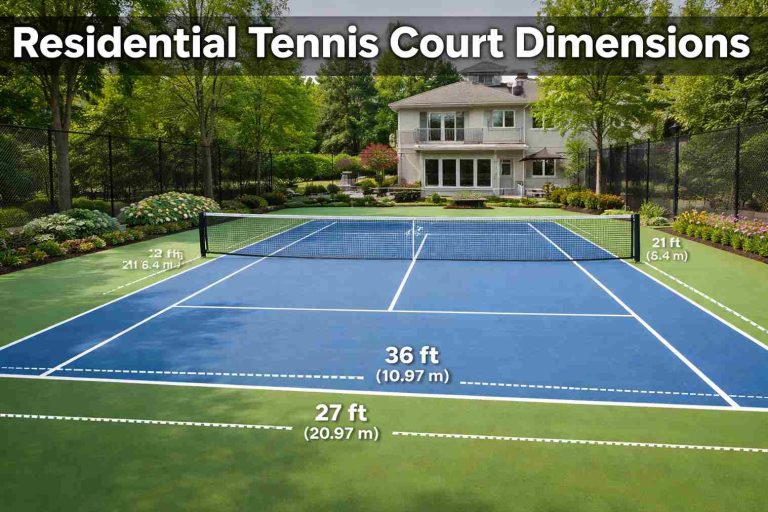
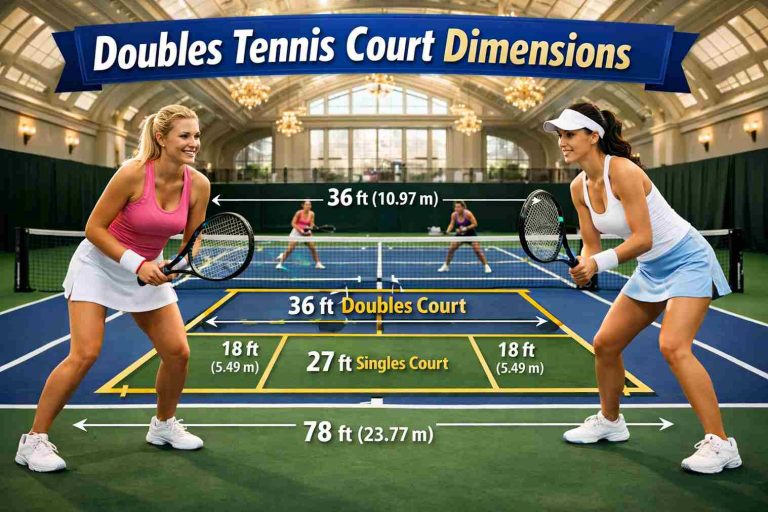
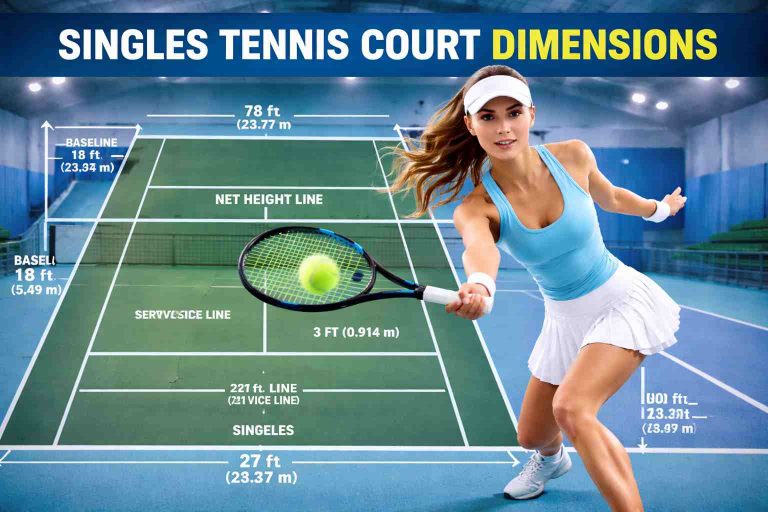
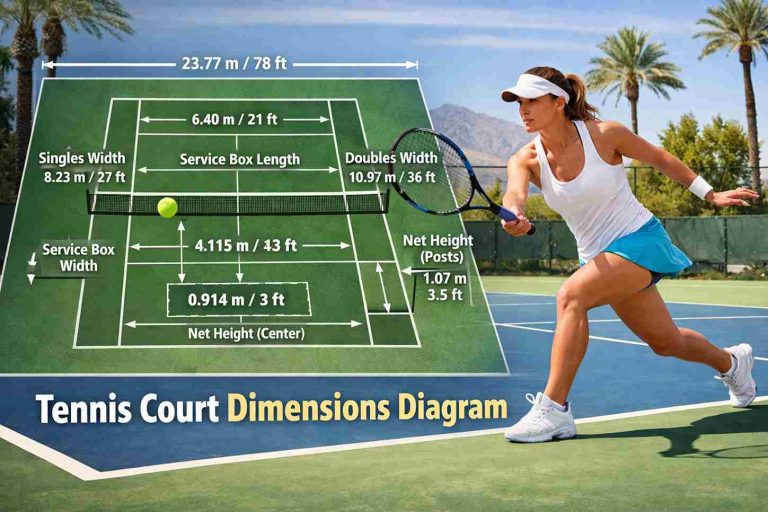
Tennis court dimensions are standardized worldwide to ensure consistency, fairness, and smooth gameplay at every level, from recreational matches to professional tournaments. According to international regulations, a standard tennis court measures 23.77 meters (78 feet) in length. The width of the court depends on the type of match being played: 8.23 meters (27 feet) for singles and 10.97 meters (36 feet) for doubles.

The court is divided into two equal halves by a net placed across the center. The net height is 1.07 meters (3 feet 6 inches) at the posts and 0.914 meters (3 feet) at the center. Running parallel to the net are the service lines, positioned 6.40 meters (21 feet) from the net on each side, forming the service boxes used during play.

The center service line splits each service box into left and right sections, while the baseline marks the back boundary of the court. Singles and doubles sidelines define the side boundaries for their respective formats. All lines are considered part of the court and are typically 2.5 to 5 centimeters wide, clearly visible for accurate line calls.

Beyond the playing area, adequate space around the court is essential for player safety and movement. For competitive play, the recommended total area is 36.6 meters long and 18.3 meters wide, allowing room for running, serving, and ball retrieval.

Understanding tennis court dimensions is important for players, coaches, officials, and facility designers. Proper measurements not only maintain the integrity of the game but also enhance performance, strategy, and safety, making standardized court dimensions a fundamental aspect of tennis worldwide.